

Here Practical Dealer Education

Lease Here Pay Here practical dealer education gives independent operators the real world tools to design, launch, and optimize an LHPH model with confidence. This page outlines how hands on training, compliance guidance, and portfolio performance methods come together to improve collections, reduce risk, and grow stable cash flow. Whether you are converting from BHPH, adding LHPH to a single rooftop, or scaling to multiple locations, you will find processes and benchmarks you can put to work quickly. Explore curriculum paths such as lease here pay here dealer education, operations training, and compliance education designed for owners, GMs, and department leads. Dive into collections playbooks, underwriting guardrails, payment performance metrics, and technology integration best practices that fit real store constraints. Learn how to structure leases for clarity and predictable performance while building customer loyalty and protecting capital.
Use this page to register members of your dealership ASAP!
ONLY $299 For Each Addt'l Dealership Attendee
CAESARS ROOMS DISCOUNTED TO $189 a night
(Plus Resort Fee)
This practical LHPH education is built around proven field execution and measurable outcomes. Use it to tighten lease structure, set disciplined credit policy, elevate collections, and align teams. For deeper tracks, see portfolio management training, collections training, and technology integration training. You can also compare related BHPH practical dealer education resources.
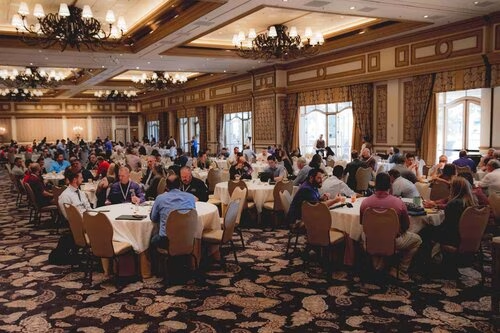
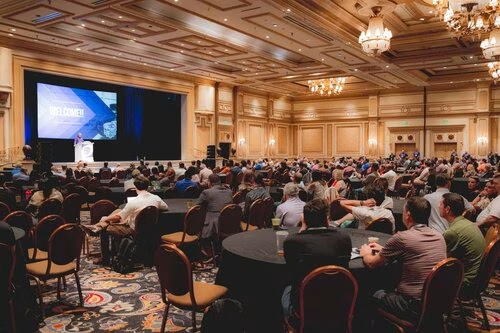
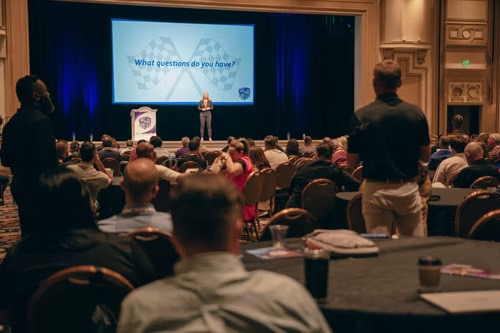
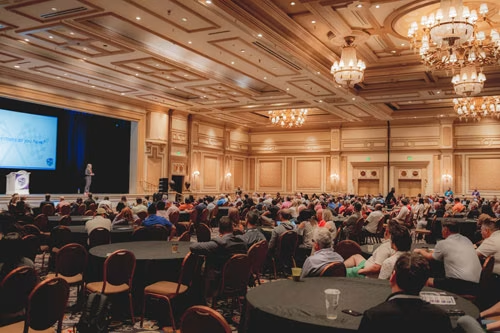
Why Lease Here Pay Here Practical Dealer Education Matters
LHPH is not simply BHPH with different paperwork. It changes the economics of vehicle control, customer lifecycle, residual exposure, and regulatory posture. Practical dealer education gives teams the frameworks and checklists to execute consistently, monitor leading indicators, and adapt quickly to market or regulatory shifts. With a practical approach, stores move beyond theory into playbooks, templates, and data backed decisions that return time to managers and reduce variability between locations.
Core Outcomes You Can Expect
- Clear lease structure with transparent terms and predictable payment cadence
- Disciplined credit policy that balances approval rate and expected loss
- Collections workflows tuned for early contact, promise integrity, and recovery yield
- Compliance guardrails aligned to state specific lease regulations and disclosures
- Technology stack alignment for e-sign, GPS or telematics, payment processing, and analytics
Foundational Curriculum Path
The path begins with fundamentals that anchor every LHPH operation, then moves into leadership, analytics, and scale. Many teams start with lease here pay here dealer training program for structured onboarding, then expand into role specific modules. When operators want to compare BHPH and LHPH side by side, buy here pay here operations training highlights where approaches should differ.
Lease Structure That Protects Customers and Capital
A practical lease structure balances payment affordability, vehicle condition, residual position, and term length. Education modules show how to set inception payments appropriately, avoid residual cliffs, and build customer friendly options that reduce confusion at turn in. Use lease structure education and vehicle return process training to create consistent outcomes that protect reputation and profit.
- Term and mileage alignment with vehicle segment and reconditioning plan
- Clear wear and use standards with photos and examples in delivery paperwork
- Transparent payment paths including biweekly or weekly options with calendar based drafting
Credit Policy and Underwriting Discipline
LHPH underwriting should prioritize payment stability and verifiable income streams over credit scores alone. Training emphasizes ability to pay, budget to income ratios, residence stability, and employer tenure. For cross training with retail installment insights, review dealer underwriting education and LHPH credit policy education.
- Budget analysis with essential expenses documented and validated
- Down or inception payment guidance tied to expected loss and residual risk
- Stip verification standards to protect against first payment default
Collections Playbooks That Improve Early Stage Performance
Effective LHPH collections focus on early stage contact quality, precise promises to pay, and structured escalation before default. Practical education gives your team talk tracks, compliance friendly scripts, and dashboards that spotlight stalled accounts. Review collections training, real world collections training, and complementary dealer collections training resources.
- Day 1 through Day 30 cadence with multi channel contact and message rotation
- Promise integrity monitoring and same day follow up automation
- Playbooks for extensions, reinstatement, and hardship paths aligned with policy
Compliance, Audit Readiness, and Regulatory Awareness
LHPH programs operate under lease specific and state specific rules. Education helps teams map disclosures, adverse action, data retention, and fee structures to the right regulatory framework. Use regulatory compliance training, audit readiness education, and broader dealer compliance best practices. For multi state operators, connect to state compliance education for dealers and federal compliance training for dealers.
Portfolio Analytics and Payment Performance
Data turns activity into improvement. Practical modules show how to monitor static pool losses, roll rates, promise kept rate, RPC, and extension effectiveness. Learn to segment by source, vehicle, term, and collector to find lift. See portfolio management training, payment performance education, and dealer portfolio management education.
- Dashboards that highlight early stage risk and late stage recovery variance
- Inventory level analytics linking recon spend and residual outcomes to collections
- Goal setting by collector tied to controllable inputs and coaching plans
Operations and Cross Functional Alignment
A strong LHPH operation relies on synchronized sales, accounting, service, and collections. Students learn handoffs, documentation standards, and exception handling. Operators can add operations best practices, dealer operations management training, dealer accounting training education, and service operations training for complete alignment.
Technology Integration That Scales
Technology multiplies well designed processes. Practical sessions map DMS, LMS or CRM functions, e-sign and disclosures, GPS or telematics, payment portals, and dialers. Start with LHPH technology integration training and broader dealer technology training education to ensure configuration and adoption create measurable gains.
- Field tested call flows and automation that reduce touches and increase RPC
- Payment portal adoption tactics and nudges that elevate on time performance
- GPS policy and ethical use guidelines aligned with disclosures
Leadership, Coaching, and Culture
Culture sustains performance. Practical leadership workshops help managers set clear expectations, run scorecard driven one on ones, and reinforce compliant behaviors. Explore leadership training, dealer leadership development training, and dealer professional development training. When new markets or rooftops are added, advanced operations training and growth strategy education support scale.
Market Specific and Event Based Learning
Teams seeking regional context can visit resources for Texas, Florida, and North Carolina. For peer learning, check education and events, 2025 featured speakers, and 2025 event agenda. Travel planning resources like discounted airfare support teams that attend in person workshops.
Related Learning Tracks and Research
Many dealers operate LHPH and BHPH models simultaneously. Compare methods with buy here pay here dealer education, BHPH collections best practices, and BHPH operations best practices. For deeper analysis and templates, visit the blog and the research page template. Organizational information is available at about us and questions can be directed via contact us. Policies are published at privacy policy.
Helpful Links
How To Use This Practical Education
Start by choosing one or two highest impact gaps. For many operators, collections promise integrity and early stage outreach are top opportunities. Build a 90 day sprint with training, role plays, and weekly scorecards. Add one process each quarter so teams can master, measure, and sustain gains. For teams planning new market entry or replatforming technology, sequence compliance, training, and system configuration 60 to 90 days prior to launch. When in doubt, lean on checklists, single source templates, and short daily huddles that keep everyone aligned.
LHPH uses a lease with different disclosures, residual exposure, and turn in processes. It impacts credit policy, collections talk tracks, wear and use standards, and accounting. Training aligns these differences so teams avoid treating leases like retail installment contracts.
Focus on RPC, promise kept rate, roll rates by bucket, extension effectiveness, charge off timing, recovery yield, and static pool losses. Segment by source channel, vehicle class, and collector to identify specific coaching and inventory actions.
Set inception payments to align with expected loss and residual exposure, not just traffic conversion. Terms and mileage should reflect vehicle condition, reconditioning plan, and customer use case. Education modules provide matrices and examples by segment.
Lease specific disclosures, wear and use terms, fee structures, adverse action, data privacy, and state lease regulations differ from retail installment. Courses cover state variations, documentation, and audit preparedness to reduce regulatory risk.
Dialer workflows, payment reminders, portal nudges, GPS policies, and e-sign reduce friction and improve contact quality. The technology integration track maps configurations and adoption strategies that lift RPC and promise integrity without adding headcount.
