

Texas: Training, Compliance, and Operations Guidance

Texas independent dealers are moving to lease here pay here to manage risk, stabilize cash flow, and expand access for credit challenged customers. This page delivers focused lease here pay here dealer education for Texas operators who want proven processes, practical training, and clear compliance guidance. From lease structure and underwriting to collections, portfolio performance, and service operations, you will find strategies tailored to the realities of Texas markets and regulations. Explore timely insights, frameworks you can put to work, and links to deeper training resources across our site. For ongoing perspectives and case studies, visit blog. To see upcoming sessions and educational opportunities, check education-and-events. If you are transitioning from buy here pay here or blending both models, this guide will help you evaluate tradeoffs, design smarter lease products, and raise performance without sacrificing customer experience.
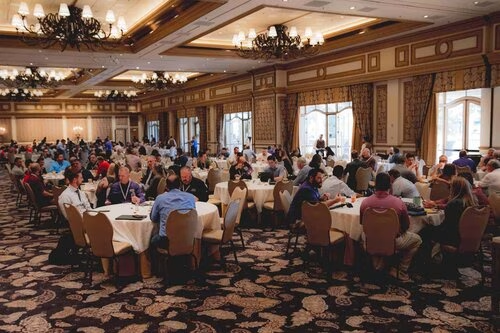
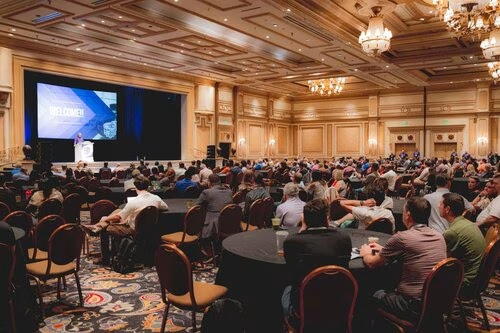
Use this page to register members of your dealership ASAP!
ONLY $299 For Each Addt'l Dealership Attendee
CAESARS ROOMS DISCOUNTED TO $189 a night
(Plus Resort Fee)
Whether you are launching lease here pay here at a single lot or scaling across multiple rooftops, the right playbook matters. Use the guidance below to align Texas licensing, disclosures, payment processing, insurance, recoveries, and reporting with your business goals. Compare additional curriculum at lease-here-pay-here-dealer-training-program and topic specific deep dives like lease-here-pay-here-compliance-education and lease-here-pay-here-collections-training.
Why Lease Here Pay Here for Texas Dealers
Lease here pay here combines in house approvals, flexible deal structures, and recurring payment performance in a format that can reduce default loss severity and improve vehicle control. Texas operators often cite faster turns on returns, improved recovery options, and more consistent cash cycles. When executed well, an LHPH portfolio can deliver strong yield with tighter risk controls than traditional retail installment contracts.
- Vehicle control and condition standards that support faster resolution on defaults and maturities
- Flexible underwriting that aligns payment, term, and mileage with customer capacity and use case
- Smoother cash flow from recurring lease payments and fee policies designed for Texas markets
- Return and remarketing processes that protect gross and speed reconditioning
Texas Considerations: Licensing, Disclosures, and Oversight
Dealers in Texas should confirm appropriate licensing, disclosures, and recordkeeping for vehicle leasing, dealer operations, and retail activities. Align lease agreements and policies with federal consumer protection standards and applicable Texas requirements for vehicle dealers, advertising, fees, payment processing, and recoveries. Train teams to follow written procedures and document each step from deal structure to asset recovery. This page provides education and checklists, not legal advice. Engage qualified counsel to validate your forms and practices.
- Use clear, compliant lease agreements, disclosures, and payment policies that match your actual practice
- Maintain strong documentation for originations, customer communications, and any fees assessed
- Standardize return inspections, charges for excess wear and mileage, and security deposit handling where applicable
- Train collections and recovery teams on lease specific rights and responsibilities
For deeper compliance frameworks, review lease-here-pay-here-compliance-best-practices, independent-dealer-compliance-education, and used-car-dealer-regulatory-compliance-training.
Designing a Profitable Lease Structure
Consistency in lease structure simplifies training, auditing, and performance management. Create a menu of lease products that fit your vehicle classes and Texas customer profiles. Define the initial payment package, payment frequency, mileage bands, residual assumptions, optional products, and return standards. Pair structure with credit policy and verification steps that are proportionate to risk.
- Mileage and use case: Commuter, rideshare, work truck, student, or secondary vehicle
- Vehicle segment: Compact, mid size, SUV, truck, and reconditioning cost trends by segment
- Term and payment: Align to customer capacity and seasonal income patterns common in Texas
- Fees and deposits: Define and disclose policies for security deposits, acquisition fees, and late fees
For step by step instruction, see lease-here-pay-here-lease-structure-education, lease-here-pay-here-credit-policy-education, and lease-here-pay-here-profitability-training.
Underwriting and Verification for LHPH
Great lease outcomes start with consistent underwriting. Use a scorecard that weights stability indicators, employment, residence, prior auto payment behavior, and documentation quality. In Texas, many customers work variable hours or seasonally. Right size payments, offer weekly or biweekly options, and verify income sources carefully. Apply a clear stip checklist and use a second set of eyes on edge approvals.
- ID, income, residence, references, insurance, and bank verification workflows
- Payment to income thresholds and reserve triggers for higher risk profiles
- Vehicle to customer fit to lower excess mileage and condition charges at return
Expand your playbook with dealer-underwriting-education and subprime-underwriting-training.
Payment Processing and Collections
Payment frictions drive avoidable delinquencies. Offer multiple channels that work for Texas customers, including in person, kiosk, ACH, debit card, and text to pay. Automate reminders and provide clear grace periods. Collections should focus on early contact, cure options within policy, and documented arrangements. For leases, understand the decision tree for payment plan, voluntary return, or recovery.
- KPI cadence: Same store on time rate, broken promise rate, extensions used, and days to cure
- Scripting that is consistent, respectful, and documented in your system of record
- Clear return and reinstatement workflows, including condition inspections and charges
Strengthen your teams with lease-here-pay-here-payment-performance-education, lease-here-pay-here-collections-training, and lease-here-pay-here-real-world-collections-training.
Vehicle Returns, Recoveries, and Remarketing
LHPH success depends on fast, consistent handling of returns and defaults. Standardize your inspection checklist, damage matrix, mileage reconciliation, and charge documentation. Keep reconditioning tight. Pre plan remarketing channels for Texas submarkets to move units quickly and protect inventory turns. When recovery is needed, follow your lease terms and document every step.
- Return appointment scripts, photo documentation, and customer acknowledgments
- Vendor scorecards for towing, keys, locksmith, and auction partners
- Cycle time targets: days from return to frontline and days from frontline to sale
Explore frameworks at lease-here-pay-here-vehicle-return-process-training, lease-here-pay-here-lease-default-education, and buy-here-pay-here-repo-process-education.
Service, Reconditioning, and Warranty Strategy
Service operations drive customer satisfaction and retention. In Texas, heat, road conditions, and long commutes can increase wear. Match reconditioning standards to lease term and mileage. Offer service packages and communicate expectations at delivery and at return. Track cost per reconditioned vehicle, comeback rates, and days out of service.
For shop playbooks, visit dealer-service-department-training and lease-here-pay-here-service-operations-training.
Technology and Data for LHPH Operators
Use a modern DMS or LMS that supports lease accounting, payment processing, collections workflows, and reporting. Integrate telematics when appropriate and permitted by law. Build dashboards by location and inventory segment. Measure delinquency buckets, renewal rates, extensions, recovery cycle time, NPV per unit, and cash in vs cash out by cohort.
- System of record with role based permissions and audit trails
- Automated payment reminders and centralized notes for all customer contacts
- APIs for accounting, credit reporting, and communication tools
See lease-here-pay-here-technology-integration-training and dealer-technology-training-education.
Accounting, Capital, and Portfolio Management
LHPH accounting differs from retail installment accounting. Maintain clean schedules for lease receivables, unearned revenue, security deposits, and residual assumptions. Stress test your capital plan for seasonality and acquisition costs in Texas auctions. Use cohort analytics to understand lifetime performance by channel and structure. When scaling, standardize chart of accounts and monthly close steps across locations.
- KPIs: net payment rate, renewal and rewrite rates, default frequency, loss severity, cash recovery ratio, inventory turns
- Capital mix analysis: floorplan, LOCs, related party, and retained earnings
- Lease accounting controls and reconciliation cadence
Deepen expertise at lease-here-pay-here-accounting-education, lease-here-pay-here-capital-strategy-education, and lease-here-pay-here-portfolio-management-training.
People, Training, and Leadership
Process is only as strong as the team. Hire for coachability and integrity. Use structured onboarding and refreshers for sales, underwriting, payments, collections, and service. Measure what you train. In Texas multi lot operations, rotate leaders to cross pollinate best practices and maintain cultural consistency.
Explore lease-here-pay-here-leadership-training, used-car-dealer-leadership-training, and buy-here-pay-here-operations-best-practices for adjacent skills that translate to LHPH performance.
Comparing LHPH and BHPH
Many Texas dealers operate both models. BHPH can be simple to explain and finance, while LHPH can provide additional control over the asset and clearer end of term options. The decision is not either or. Match structure to your customer mix, technology stack, and capital. Pilot, measure, and scale intentionally.
- LHPH strengths: asset control, return standards, flexible mileage, alternative to high ACV retail deals
- BHPH strengths: simpler messaging, established processes, familiar accounting for many teams
Compare resources at lease-here-pay-here-dealer-education and buy-here-pay-here-dealer-education.
