

Here Capital Strategy Education

Build a stronger lease here pay here program with practical capital strategy education designed for independent and subprime focused used car dealers. This page explains how to plan your capital stack, model cost of funds, improve liquidity, and align underwriting, collections, and operations to portfolio performance. Learn the differences between lease here pay here and buy here pay here capital needs, how to sequence growth, and how to evaluate bank lines, credit facilities, and private funding. You will see how to connect pricing, term, residual planning, and servicing to cash flow stability and return on equity. We also highlight risk management, compliance awareness, and documentation practices that protect access to capital. Explore the training and resources below to help your team turn funding into predictable performance and scale.
Use this page to register members of your dealership ASAP!
ONLY $299 For Each Addt'l Dealership Attendee
CAESARS ROOMS DISCOUNTED TO $189 a night
(Plus Resort Fee)
Whether you are launching lease here pay here or optimizing a mature platform, a clear capital roadmap reduces risk and expands capacity. Use the guidance on this page to evaluate sources of funds, structure terms that fit your portfolio, and apply repeatable models for pricing and performance. For deeper dives, visit resources like lease-here-pay-here-operations-training, lease-here-pay-here-portfolio-management-training, and lease-here-pay-here-compliance-education.

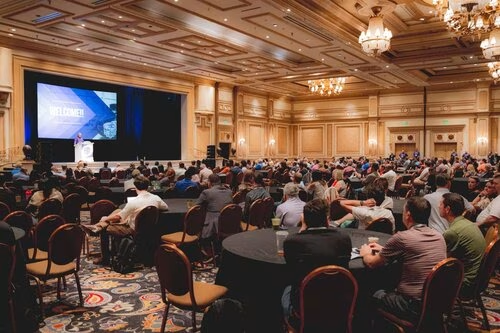
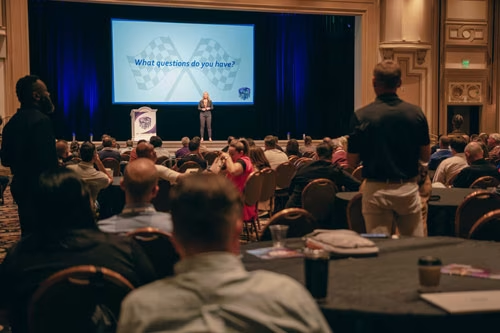

What lease here pay here capital strategy really means
Capital strategy for lease here pay here is the plan that funds your originations and servicing while protecting cash flow, covenant health, and return on equity. It covers where capital comes from, how it is priced, how quickly it recycles, and which risks could interrupt the flow. Because lease here pay here cash flows and vehicle ownership structures differ from traditional retail installment contracts, your funding and documentation must match the lease model from day one. Effective strategy connects capital to underwriting, collections, and service operations, then measures the results with portfolio performance metrics that lenders and investors trust.
Core objectives of an effective LHPH capital plan
- Fund originations at the pace your market and team can serve without liquidity stress
- Match capital terms to lease terms, expected residuals, and payment performance curves
- Minimize cost of funds while preserving flexibility and advance rates
- Protect compliance posture and documentation to keep funding uninterrupted
- Produce reliable reporting that lenders and investors can easily verify
Building the capital stack
Most successful lease here pay here operations blend multiple funding sources to balance cost, control, and scalability. Evaluate each source for pricing, advance rate, covenants, collateral, recourse, and speed to fund.
- Owner equity and retained earnings for first loss capital and flexibility
- Bank lines secured by lease receivables or vehicles with transparent covenants
- Specialty finance credit facilities tailored to LHPH structures and residuals
- Private notes from accredited investors with clear reporting and waterfall terms
- Forward flow or participation agreements to recycle cash and reduce concentration risk
Diversification reduces the chance that one lender policy shift could slow originations. As your servicing performance matures, renegotiate rate, advance, and fee schedules. Training that reinforces lender ready reporting is covered in dealer-portfolio-management-education and dealer-capital-strategy-education.
Cost of capital and pricing for lease here pay here
Your gross yield must comfortably exceed blended cost of funds plus expected credit losses, operating costs, and reconditioning to achieve a target return on equity. Blended cost of funds is the weighted average of each capital source after fees. Because lease here pay here programs often carry vehicle residual value assumptions, include expected residual outcomes or purchase option proceeds in the cash flow. Align payment schedules and terms so that principal paydown and residual expectations occur before funding maturities or step downs in advance rates.
- Track net yield after charge offs, recoveries, and extensions to understand true margin
- Model several delinquency and recovery scenarios to confirm debt service coverage cushions
- Stress test advance rate reductions and covenant headroom under portfolio seasoning
Lease structure and cash flow modeling
Unlike retail installment contracts, lease here pay here cash flows can include residuals, purchase options, or vehicle returns. Align structure with your customer profile and servicing capacity. Shorter terms reduce duration risk but increase payment size. Longer terms can smooth payments but require stronger servicing and maintenance planning. Residual assumptions must be conservative and consistent with your market level reconditioning costs and auction exit options.
- Set acquisition cost and recon budgets that fit payment-to-income guidelines and expected term
- Define residual policy with clear triggers for purchase options or returns
- Use a consistent extension framework to protect portfolio aging and lender reporting
For hands on modeling approaches and portfolio dashboards, explore lease-here-pay-here-portfolio-management-training and used-car-dealer-technology-integration-training.
Risk controls that protect access to capital
Capital partners underwrite your underwriting. Strong, consistent processes build confidence and can unlock better rates and advances. Align credit policy, deal structure, and collections actions so that payment performance is repeatable rather than personality driven. Use early payment monitoring and proactive communication to reduce roll rates and maintain portfolio health.
- Define clear income verification, residence stability, and payment method standards
- Standardize skip tracing, extensions, reinstatements, and charge off timing
- Track first payment default, 31 to 60 day delinquency, and cure rate trends weekly
Collections excellence is taught in lease-here-pay-here-collections-training and buy-here-pay-here-real-world-collections-training. Pair these with lease-here-pay-here-risk-management-education to tighten feedback loops between underwriting and servicing.
Compliance and documentation alignment
Lease here pay here programs must reflect lease specific disclosures, titling, fees, tax treatment, and end of term processes. Inconsistent documentation can interrupt funding and create avoidable risk. Build templates with legal review, then train staff to apply them exactly, every time. Ensure your compliance calendar covers federal and state updates relevant to leases and subprime servicing.
- Periodic audits of deal jackets, customer communications, and payment change notices
- Vendor management for payment processing and GPS or starter interrupt devices
- Training refreshers tied to regulatory changes and lender feedback
See lease-here-pay-here-compliance-education, dealer-compliance-best-practices, and used-car-dealer-regulatory-compliance-training for structured guidance. Educational content is not legal advice. Always consult your counsel.
KPIs lenders watch and how to improve them
Capital partners reward predictability. Track these portfolio KPIs with consistent aging rules, static pool reporting, and reconciliation to the general ledger. Use trend analysis to guide credit policy changes and inventory strategy.
- Delinquency by bucket, roll rates, and cure percentage by vintage and branch
- Net loss rate with recoveries, time to repossession, and liquidation proceeds variance
- Net yield, cash on cash returns, ROA, and ROE by product and term
- Payment method mix, auto pay penetration, and failed payment retry outcomes
Improve these indicators by tightening inventory sourcing, right sizing reconditioning, and aligning deal structure to ability to pay. Training tied to these levers is available in lease-here-pay-here-operations-best-practices, used-car-dealer-inventory-management-training, and lease-here-pay-here-payment-performance-education.
Operational levers that amplify capital returns
- Centralized underwriting standards with field level coaching and scorecards
- Payment friendly technology and reminders to lift on time rates
- Service department coordination to reduce avoidable charge offs tied to vehicle downtime
- Data integrity audits that align dealer management system, lender tapes, and accounting
Explore role based education in lease-here-pay-here-management-training, lease-here-pay-here-service-operations-training, and buy-here-pay-here-accounting-education for cross functional alignment.
Step by step roadmap to strengthen your LHPH capital program
- Clarify growth targets by unit volume, advance needs, and equity at risk by quarter
- Document credit policy, deal structure, and collections workflows for lender review
- Build a three scenario cash flow model base, conservative, and growth cases
- Map current covenants and headroom, then define trigger based action plans
- Prepare lender ready reporting packs with static pools and reconciliation checks
For templates and peer insights, visit dealer-peer-learning-education, dealer-workshops-and-training, and the latest posts in blog. To learn more about our team and approach, see about-us and education-and-events.
Common mistakes to avoid
- Pricing deals on headline rate rather than net yield after true losses and fees
- Overestimating residual values or resale timelines for returned vehicles
- Allowing undocumented exceptions that erode portfolio predictability and lender trust
- Neglecting data integrity between servicing system and accounting leading to reporting breaks
- Chasing unit growth without confirming covenant headroom and advance capacity
