

Education for Independent Used Car Dealers

Operate your lease here pay here program with confidence. This page delivers practical lease here pay here compliance education focused on real world dealership operations. Learn how to align your processes with federal and state requirements, strengthen documentation, and prepare for audits without slowing down sales or collections. We cover consumer leasing disclosures, fair lending, UDAAP, FCRA, GLBA Safeguards, OFAC, Red Flags, marketing rules, payment processing, and repossession procedures. Whether you manage one rooftop or multiple locations, you will find actionable guidance, checklists, and links to deeper training resources to help reduce risk and improve payment performance. Use this content to benchmark your current program, close gaps in policies, and support consistent outcomes across your team. Explore related education, templates, and workshops to keep your store compliant and ready for growth.
Use this page to register members of your dealership ASAP!
ONLY $299 For Each Addt'l Dealership Attendee
CAESARS ROOMS DISCOUNTED TO $189 a night
(Plus Resort Fee)
Compliance is a daily discipline. This resource organizes the essentials so your team can implement, train, and audit in a repeatable way. Dive into lease structure rules, advertising standards, data privacy controls, collections boundaries, and state level nuances. For deeper dives, visit education and events, dealer resources, and our blog for current insights.

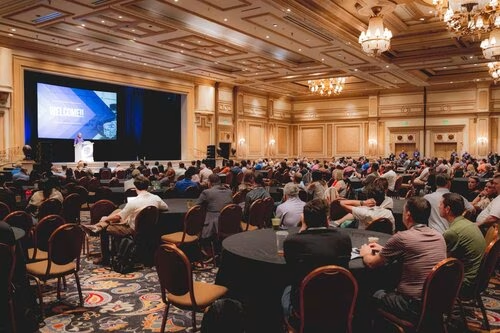
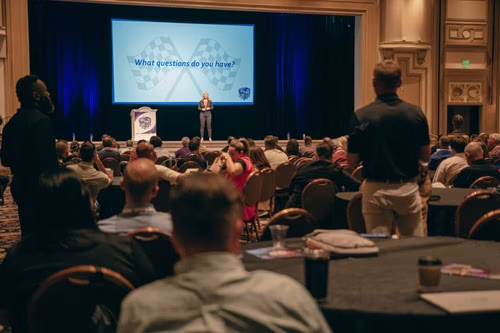
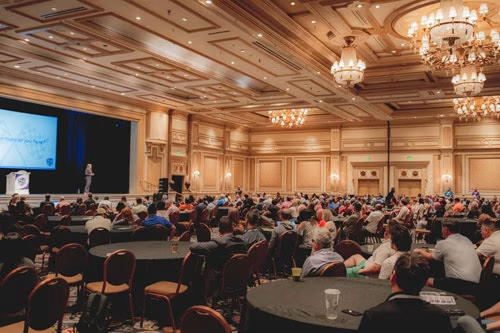
What Lease Here Pay Here Compliance Education Covers
Lease here pay here compliance education equips independent dealers to structure, disclose, service, and collect on consumer auto leases in a way that is consistent, documented, and defensible. Strong programs reduce losses, protect customer relationships, and limit regulator and plaintiff exposure. The core building blocks include policy design, staff training, quality control, and audit readiness.
Key Regulatory Areas Every LHPH Program Should Address
- Consumer leasing disclosures under applicable federal and state rules for lease terms, payments, fees, and end of lease obligations
- Fair lending and UDAAP practices across pricing, underwriting, treatment, and communications
- FCRA and data handling, including permissible purpose, Adverse Action notices when required, and accuracy in reporting if you furnish
- GLBA Safeguards and privacy notices, vendor oversight, and information security controls for customer data
- OFAC screening and Red Flags identity theft prevention procedures tied to onboarding and account maintenance
- Advertising and marketing rules, including truth in pricing, clear lease terminology, and digital ad disclosures
- Collections boundaries, contact frequency, text and call consent, payment processing, and repossession protocols
Structuring a Compliant Lease Here Pay Here Contract
Clarity and consistency in lease structure are essential. Define the capitalized cost, rent charge or equivalent, payment schedule, late fees, mileage or usage standards if used, and end of lease options such as purchase price or return conditions. Ensure any fees are lawful, reasonable, and disclosed before signing. Align your lease forms, menu, and deal jacket checklist so every deal is documented the same way, every time. State law often controls titling, taxes, license fees, right to cure windows, and disclosures that go beyond federal requirements. Maintain a state specific checklist and keep an archive of currently approved forms.
Fair Lending and UDAAP Guardrails
Your pricing, underwriting, and exception processes should be policy driven and auditable. Use a written credit policy that defines minimum criteria, verification steps, and scorecard or matrix elements. Track pricing and exceptions by salesperson and manager. Monitor approval and payment performance trends across protected classes where lawful. Simple, accurate explanations in ads, on your website, and in the showroom help avoid unfair or deceptive practices. Commit to plain language and avoid undefined or misleading terms.
Privacy, Data Security, and Vendor Oversight
Customer data is a prime risk point. Follow a written information security program that covers risk assessment, access controls, encryption where feasible, secure disposal, and incident response. Train all staff on phishing resistance and safe handling of IDs, bank data, and credit files. Vet vendors that touch customer data and keep contracts with defined security standards and breach notification terms. Document your GLBA Safeguards risk assessment and periodic testing. Retain privacy notices and delivery logs in the deal jacket or electronic file.
Advertising and Digital Compliance for LHPH
Use the correct vocabulary for leases in all ads and site content, and avoid financing language that can confuse consumers. When you quote payments, include material terms, conditions, and availability. Online forms should display clear consent language for calls and texts. Maintain records of all ad versions and associated disclosures. Review third party marketplace listings to ensure they mirror your standards. Monitor website analytics and lead forms for proper consent capture and retention.
Payment Processing, Contact Rules, and Collections
Design a collections policy that respects contact frequency limits, do not call lists, and consent requirements for texts or prerecorded messages. Payment channels should be secure and consistent with your lease terms. If you allow card or ACH, use compliant authorization and disclosure. For late stage accounts, follow a documented right to cure process if required by your state. Repossessions must avoid breach of peace and include proper notices of intent and post sale disclosures where mandated. Train collectors to log all contacts, promises, and hardships, and to escalate edge cases to management.
Deal Jacket, Recordkeeping, and Audit Readiness
Strong files win audits. Build a deal jacket checklist that includes ID and income verification, OFAC check confirmation, Red Flags resolution, lease disclosures, privacy notices, delivery acceptance, condition reports, and any exception approvals. Keep a policy library with version dates, staff training logs, and evidence of testing. Run internal audits on a periodic sample. Track findings, corrective actions, and re testing. Consistent documentation reduces disputes and shortens exam timelines.
Common Gaps Seen in LHPH Stores
- Inconsistent lease disclosures across locations or salespeople
- Missing or outdated privacy and Safeguards program documents
- Untracked pricing exceptions and weak fair lending monitoring
- Informal repossession decision making and poor notice documentation
- Little to no vendor due diligence or data processing agreements
Practical Steps to Level Up Your Program
- Map your current process from lead to end of lease and identify every compliance touchpoint
- Standardize lease forms and disclosures, and lock version control
- Build a state specific checklist for taxes, fees, titling, cure rights, and notices
- Launch quarterly training for sales, F and I, and collections with scenario based practice
- Implement a simple QA audit on every fifth deal and every major repossession
KPIs That Signal Compliance Health
Track early payment defaults, exception rates, complaint volume and resolution time, cure to repo ratios, repo to reinstatement ratios, and post sale deficiency disputes. Audit a sample of recorded calls and texts for consent and content. Review data access logs for unusual activity. Tie incentives to quality and customer outcomes, not just volume.
Deepen Your Knowledge With These Resources
Explore focused training, playbooks, and workshops designed for lease here pay here and related dealership models.
- Lease Here Pay Here Dealer Education
- Lease Here Pay Here Regulatory Compliance Training
- Lease Here Pay Here Audit Readiness Education
- Lease Here Pay Here Compliance Best Practices
- Lease Here Pay Here Collections Training
- Federal Compliance Training for Dealers
- State Compliance Education for Dealers
- Dealer Compliance Best Practices
- Education and Events
- Blog
Related Topics You May Also Like
About Our Approach
We focus on practical, real store execution. Every framework comes with checklists, forms alignment, and training aids so managers can roll out changes across sales, F and I, and collections. We help you meet requirements while preserving customer experience and profitability. Learn more about our team and perspective in our about page and browse the blog for current industry updates and case studies.
