

Proven Training, Compliance, and Operations Guidance

Lease Here Pay Here dealer education helps independent and used car dealers build predictable revenue, strong compliance, and reliable customer outcomes. This page explains how LHPH differs from traditional retail or Buy Here Pay Here, what skills your team needs, and the strategies that protect margins while improving customer satisfaction. You will learn how lease structure design, credit policy, collections, servicing, and technology work together to create a sustainable model. We also highlight performance metrics, risk controls, and practical workflows you can apply right away. Whether you are exploring LHPH for the first time or optimizing a mature program, the guidance below delivers real world tactics, simple checklists, and links to deeper resources across operations, compliance, and leadership. Use this page to align your team, sharpen processes, and set targets that turn inventory and capital into consistent cash flow.
Use this page to register members of your dealership ASAP!
ONLY $299 For Each Addt'l Dealership Attendee
CAESARS ROOMS DISCOUNTED TO $189 a night
(Plus Resort Fee)
LHPH success is driven by repeatable processes, disciplined underwriting, and proactive customer communication. The content below maps the complete life cycle from inventory strategy to lease return, with step by step best practices and compliance reminders. Explore the related training pages for deeper dives on collections, risk management, technology, and performance improvement.

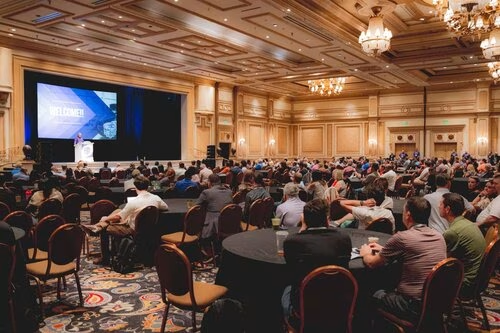
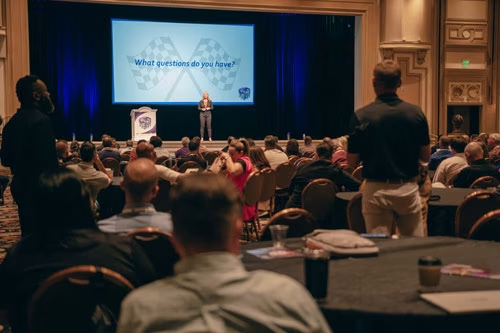
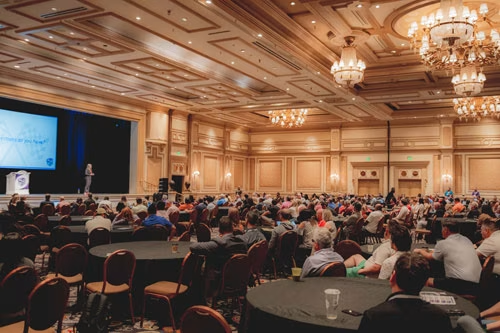
What is Lease Here Pay Here and why it matters
Lease Here Pay Here combines in house financing with closed end or open end lease agreements designed for customers who benefit from flexible terms, transparent payment expectations, and a clear path to end of term options. Unlike retail or Buy Here Pay Here, LHPH emphasizes residual setting, vehicle condition standards, and lease specific disclosures. When designed well, dealers can smooth cash flow, manage portfolio risk, recycle inventory through reconditioning and re lease, and improve lifetime customer value with upgrade or renewal strategies.
Core pillars of effective LHPH dealer education
- Lease structure education: term, mileage, residual, fees, disclosures, and fair treatment of customers
- Credit policy and underwriting calibrated to income stability, payment method, and vehicle use case
- Collections playbooks for early stage outreach, payment arrangements, extensions, and hardship protocols
- Portfolio management that tracks delinquency buckets, extensions, recoveries, and net yield by cohort and store
- Regulatory compliance that aligns advertising, disclosures, data security, and state lease rules with written procedures and training
- Operational efficiency across inventory sourcing, recon standards, titling, insurance verification, and return inspections
- Technology integration for DMS, payment processing, eSign, GPS or starter interrupt where permitted, and analytics dashboards
LHPH vs BHPH: key differences dealers must master
While both models serve credit challenged customers with in house finance solutions, LHPH relies on lease mechanics that change risk, accounting, and customer communication. Residual assumptions and end of term condition standards create new value levers. The return or buyout decision requires clear disclosures and a consistent inspection process. Collections teams must understand lease obligations, cure opportunities, and lawful remedies. Training should reflect these differences so that sales, accounting, and servicing speak the same language.
Compliance foundations for LHPH programs
Compliance starts with accurate, plain language disclosures and advertising that matches the actual program. Build policies for application intake, adverse action notices, payment processing, data privacy, and repossession or voluntary return. Train staff on your state lease rules, fee caps, notice timing, and permitted remedies. Align your forms library, eSign vendor, and document storage with audit readiness. Keep a version controlled compliance manual, run periodic file reviews, document staff training, and monitor complaints to catch and fix issues early.
- Start with lease specific compliance training: lease-here-pay-here-regulatory-compliance-training and lease-here-pay-here-audit-readiness-education
- Build a procedures library with state rule highlights: lease-here-pay-here-compliance-education
Operational blueprint from lead to lease return
A predictable LHPH operation follows a clear sequence. Marketing and lead handling set expectations on mileage limits, payments, and end of term choices. Sales gathers income proof, residence stability, references, insurance, and preferred payment channel. Underwriting applies tiered guidelines by vehicle cost, term, and risk score. Funding ensures signatures, disclosures, and document images are complete before vehicle release. Servicing opens communication within the first week, confirms payment schedules, and uses reminders to prevent roll into delinquency. End of term planning starts months before maturity, with outreach for upgrade, buyout, or return. Return inspections follow a written standard with photos, wear and tear matrix, and customer acknowledgement.
Credit policy and underwriting guardrails
Right sizing the vehicle and term to the customers verified capacity is central to lease performance. Create scorecards that weigh income stability, time on job, time at residence, housing cost, prior auto history, and payment method. Set residuals and fees consistently by vehicle segment. Cap total transportation cost as a percent of verified net income. Document exceptions and require second look approval for variances above preset thresholds. Keep your risk tiers aligned with collections team bandwidth, and update guidelines quarterly based on portfolio results.
- Deep dive resources: lease-here-pay-here-credit-policy-education and lease-here-pay-here-underwriting-education
Collections that protect customers and portfolio health
Strong collections start before the first due date. Confirm contact preferences, schedule reminders, and explain how partial payments and extensions work. In early stage delinquency, use friendly, solutions oriented outreach. Align hardship options with documented rules to keep treatment consistent. Where lawful, use GPS pings or starter interrupt policies that are transparent and fairly applied. Measure right party contacts, promise kept rates, roll rates by bucket, and expense to collect. Recoveries and reinstatement policies should be written and calibrated to long term yield, not one time events.
- Practical training: lease-here-pay-here-collections-training and lease-here-pay-here-payment-performance-education
Inventory, reconditioning, and pricing for lease economics
Your LHPH inventory strategy should target reliable makes, well known service histories, and parts availability that supports fast recon. Aim for consistent book to wholesale spreads to protect residuals. Standardize recon checklists, cap recon spend by segment, and shorten days to frontline. Price for total yield, not only front end gross. Use residuals that balance affordability with expected wholesale values at maturity. Maintain tight title work and insurance verification to protect your position throughout the term.
Technology stack and automation
Select a DMS or LHPH platform that supports lease specific calculations, accurate disclosures, automated reminders, and integrations to payment processing and eSign. Build dashboards for delinquency, charge offs, extensions, and net yield by cohort. Use texting and email with opt in records, and record consent for autodialed outreach where required. Keep role based permissions and an audit trail for changes. Integrate accounting to capture lease income recognition, fees, reserves, and reconditioning costs accurately and consistently.
KPIs that keep your LHPH portfolio on track
Monitor approval rate, booked to approved ratio, first payment default, 31 to 60 and 61 to 90 day delinquency, renewal rate, return rate, buyout rate, average days in inventory, inventory turn, average recon spend, net yield to maturity, charge off rate net of recoveries, and staffing ratios for collections and servicing. Analyze by cohort and store to see what programs, vehicle segments, and sales practices drive the best long term performance.
Team roles, training cadence, and leadership focus
Clarify roles for sales, underwriting, funding, servicing, and collections, and provide cross training so handoffs are smooth. New hires should complete policy training, shadow calls, and pass a checklist before solo work. Recurring refreshers keep compliance and communication skills sharp. Managers should run weekly huddles on KPIs, file quality, and customer escalations. Quarterly reviews update credit policy, residual tables, and scorecards based on actual portfolio results. Leadership should model fair and consistent treatment, celebrate customer success stories, and track coaching effectiveness.
- Leadership and management resources: lease-here-pay-here-leadership-training and lease-here-pay-here-management-training
Customer experience and retention
Retention in LHPH means fewer skips, lower delinquency, and more renewals or buyouts. Begin with a transparent welcome call, payment education, and a clear contact path if life happens. Offer simple online payment options and clear hours for in person support. Reinforce expectations on mileage and maintenance and explain what normal wear looks like. Use periodic check ins to uncover issues early. Present upgrade or renewal options well before maturity with honest comparisons to buying out or returning. After a clean return, consider re leasing the customer into a vehicle that better fits budget and usage.
- Additional resources: lease-here-pay-here-customer-retention-training and dealer-customer-experience-education
Profitability levers and growth planning
Profit in LHPH is a function of risk selection, disciplined pricing, fast turns, consistent collections, and efficient reconditioning. Growth requires repeatable processes and the right capital structure. Assess staffing before expanding stores, confirm your training pipeline, and standardize reporting so new rooftops plug into the same playbook. As your portfolio scales, revisit insurance requirements, technology capacity, and recovery vendors. Keep a written growth plan with quarterly targets for originations, delinquency, and cash on cash returns.
- Explore growth and capital topics: lease-here-pay-here-growth-strategy-education and lease-here-pay-here-capital-strategy-education
Related education and resources
Deepen your team knowledge with these focused learning paths and insights.
- lease-here-pay-here-dealer-training-program
- lease-here-pay-here-operations-training
- lease-here-pay-here-operations-best-practices
- lease-here-pay-here-portfolio-management-training
- lease-here-pay-here-profitability-training
- lease-here-pay-here-service-operations-training
- blog and education-and-events
- about-us and contact-us
- Regional training tracks: lease-here-pay-here-training-southeast and lease-here-pay-here-training-mid-atlantic
Lease Here Pay Here education FAQs
For broader context across dealer education, explore dealer-workshops-and-training, dealer-industry-insights-education, and complementary BHPH content at buy-here-pay-here-dealer-education. For privacy and data handling standards, see privacy-policy.
