

Used Car and BHPH Dealers

Dealer Peer Learning Education brings used car, buy here pay here, lease here pay here, and independent dealers together to solve everyday challenges with real world strategies. This page is your guide to practical training, peer to peer collaboration, and research driven insights that help you improve compliance, operations, collections, and profitability. Explore how facilitated roundtables, case studies, and benchmark sharing accelerate learning and create accountability across your store or group. Whether you manage sales, collections, underwriting, service, or accounting, you will find proven frameworks and checklists you can put to work now. Learn which topics fit your goals, how cohorts are structured, and where to find deeper education tracks, workshops, and industry updates across our site. Build stronger teams, optimize processes, and grow with confidence through targeted dealer peer learning education designed for results.
Use this page to register members of your dealership ASAP!
ONLY $299 For Each Addt'l Dealership Attendee
CAESARS ROOMS DISCOUNTED TO $189 a night
(Plus Resort Fee)
This resource explains the peer learning model, sample agendas, and the role of playbooks, KPIs, and compliance guides. It also links to topic specific pages so you can dig deeper by function. Use it to prepare your team, align expectations, and map a step by step plan for operational gains that last.
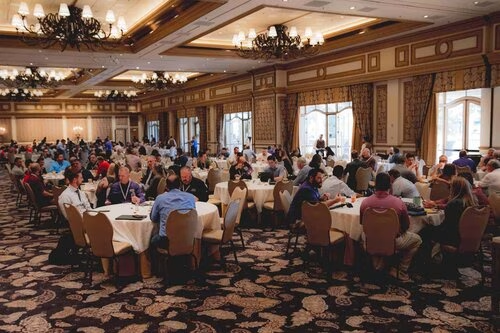
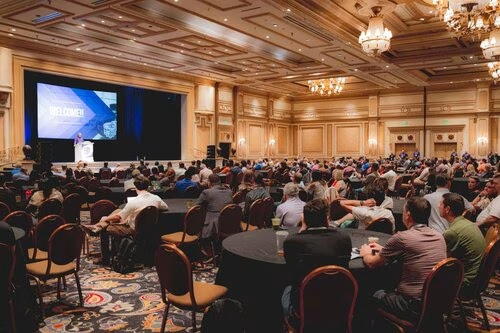
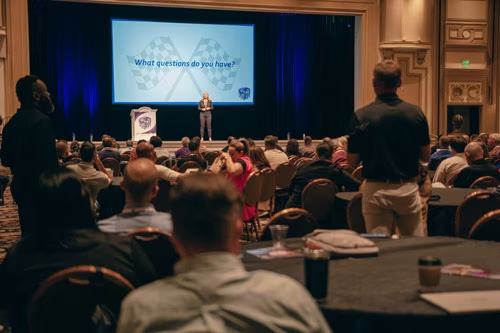
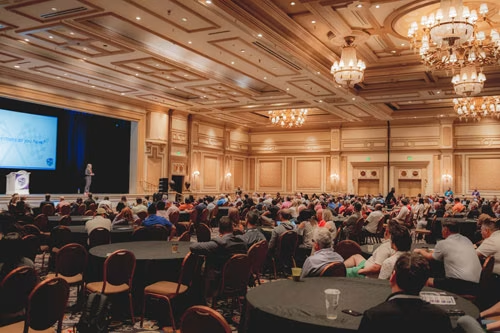
What is Dealer Peer Learning Education
Dealer Peer Learning Education is a structured format where operators compare processes, performance metrics, and playbooks to speed up improvement. It blends short form instruction with guided discussion, so stores can see what works in the field, why it works, and how to implement it in their own market. Sessions often include live KPI reviews, case studies, and tool walkthroughs, so every participant leaves with a clear action list and reference materials. The approach also emphasizes compliance alignment and customer experience, making sure growth is sustainable and data driven.
Who Benefits Most
The model is built for independent used car retailers, buy here pay here and lease here pay here operators, subprime finance teams, and multi rooftop groups. New managers get roadmaps and templates. Experienced leaders get peer validation, benchmarking, and advanced techniques. Teams in sales, collections, underwriting, service, accounting, technology, HR, and marketing work from a common language, which reduces friction and speeds execution. If your goals include higher payment performance, better inventory turns, lower charge offs, faster recon, and stronger compliance posture, peer learning can help.
How Peer Learning Sessions Work
Cohorts are typically organized by store type, size, or role, so discussions stay relevant. Each session opens with a short, practical lesson tied to a template or checklist. Dealers then test the framework against real cases and current numbers. Participants share what they tried, what failed, and how they adjusted. Facilitators capture proven steps into a playbook and a simple scorecard, which becomes the basis for follow up. The result is consistent execution and a repeatable cadence for improvement.
- Short lessons tied to checklists and tools
- Live benchmarking using agreed upon KPIs
- Open problem solving with peer validation
- Documented playbooks and follow through
Core Topics and Deep Dives
Explore targeted education across operations, compliance, underwriting, collections, marketing, sales, service, technology, leadership, and finance. Use the links below to find deep dives designed for your role and goals.
- used-car-dealer-education for a full overview of independent used car training tracks
- buy-here-pay-here-dealer-education covering BHPH operations and risk
- dealer-workshops-and-training for practical, hands on sessions and labs
- dealer-education-resources with templates, checklists, and guides
- education-and-events for calendars and topic tracks
Operations, Compliance, and Risk
Strong operations start with simple, consistent workflows and clear metrics. Peer sessions walk through each step of the customer journey, from lead to sale to funding to first payment and beyond. Dealers compare turn times, approvals, advances, deal structures, repossession processes, and service throughput, and then align on best practices that fit local regulations. Compliance is woven into every topic, not bolted on. Teams use plain language policies and routine audits to close gaps and prevent drift.
- used-car-dealer-operations-training and buy-here-pay-here-operations-best-practices for process design
- used-car-dealer-regulatory-compliance-training and dealer-compliance-best-practices for policy and audit guidance
- buy-here-pay-here-collections-training and buy-here-pay-here-compliance-best-practices for collections and risk
Underwriting, Collections, and Portfolio Health
Peer learning emphasizes tight feedback loops between underwriting and collections. That means setting clear credit policy, pricing for risk, and updating scorecards when early payment behavior changes. Dealers share methods for pre first payment outreach, skip tracing tools, extensions, rewrites, and hardship programs that support both performance and customer relationships. The portfolio view is front and center, so teams connect daily actions to long term charge off and recovery outcomes.
- buy-here-pay-here-underwriting-education and dealer-underwriting-education for decisioning frameworks
- buy-here-pay-here-collections-best-practices and dealer-collections-training for call models and policies
- buy-here-pay-here-portfolio-management-education and dealer-portfolio-management-education for KPI dashboards
Inventory, Pricing, and Service Throughput
The right car, the right price, and fast recon drive turn and gross. Peer learning compares sourcing channels, appraisal discipline, and data informed pricing ladders. Teams often standardize recon workflows and parts usage to shorten cycle times without sacrificing quality. Service advisors and sales managers align around delivery dates and expectation setting, which improves CSI and first payment rates.
- buy-here-pay-here-vehicle-acquisition-training and used-car-dealer-inventory-management-training for sourcing and turn
- used-car-dealer-pricing-strategy-education for pricing ladders and aging controls
- used-car-dealer-service-operations-training for recon throughput and quality
Sales, Marketing, and Payment Performance
Sales and marketing fuel the front end, but true success shows up in on time payments. Peer sessions align lead handling, appointment setting, disclosure, and delivery with underwriting rules and payment coaching. Marketing plans focus on audience fit and lifetime value rather than short term spikes. Stores that connect pre sale education with post sale communication see higher retention and fewer first defaults.
- dealer-sales-training-education and subprime-sales-process-training for sales flow and scripts
- dealer-marketing-training-education and buy-here-pay-here-marketing-strategy-education for lead plans that convert
- buy-here-pay-here-payment-performance-education for post sale engagement
Leadership, Culture, and Accountability
Peer learning works best when leaders set targets, inspect what they expect, and coach to the plan. Managers gain tools for daily huddles, one on ones, and weekly scorecards. Culture is built around truth in numbers, clear roles, and steady improvement. Stores celebrate process adoption and customer outcomes as much as gross, which creates durable gains.
- dealer-leadership-development-training for coaching and change management
- dealer-operations-management-training for cadence, scorecards, and meetings
Technology and Data Integration
Tools only help when workflows are clear. Sessions focus on integrating DMS, CRM, dialers, payment platforms, GPS, and accounting with simple rules and exception reporting. Teams align around one source of truth and a short list of KPIs to prevent dashboard overload. The result is faster decisions and cleaner handoffs.
- dealer-technology-training-education and used-car-dealer-technology-integration-training for system alignment
- dealer-accounting-training-education for clean books and audit trails
Regional and Format Options
Choose regional sessions, virtual cohorts, or advanced intensives. Regional formats help you compare against nearby markets, while virtual options keep momentum between in person events. Advanced tracks are designed for multi rooftop operators and roles with complex integrations.
- used-car-dealer-training-midwest, used-car-dealer-training-northeast, and buy-here-pay-here-training-southeast for regional options
- dealer-advanced-operations-training for intensive cohorts and labs
How to Prepare Your Team
Bring recent KPIs, current checklists, and a draft of your policies. Agree on one or two focus areas for the next 90 days. Assign owners for each action item and schedule weekly huddles for progress. Keep changes small enough to execute within your normal workload. Document your new standard work and update training materials as you go, so improvements stick when staff or volume changes.
Helpful Links and Ongoing Learning
Use these pages to stay current on research, industry insights, and event experiences that support peer learning.
- blog for case studies and industry analysis
- dealer-industry-insights-education for trends and benchmarks
- about-us to learn about our mission and team
- education-and-events for schedules and topic maps
- dealer-education-resources for downloads and tools
- home to navigate the full site
- privacy-policy for data and policy details
