

for Used Car and BHPH Operations

Accurate, timely accounting is the backbone of a profitable dealership. This page delivers practical dealer accounting training and education tailored to used car and buy here pay here operations, from day one bookkeeping to advanced controls that scale. Whether you are refining your month end close, building a chart of accounts for retail and BHPH, or improving cash flow forecasting, our guidance is built for real world dealership workflows and DMS realities. Explore frameworks that connect accounting with collections, sales, inventory, and compliance so every number ties out and every decision is aligned to profitability. You will find process maps, internal control checklists, reconciliation best practices, and KPI dashboards that make audits smoother and reporting faster. If you are also developing leaders and tightening operations, see related education across dealer compliance, risk, and portfolio management to round out a complete dealership back office system that grows with you.
Use this page to register members of your dealership ASAP!
ONLY $299 For Each Addt'l Dealership Attendee
CAESARS ROOMS DISCOUNTED TO $189 a night
(Plus Resort Fee)
This dealer accounting training and education hub is designed for controllers, office managers, CFOs, owners, and BHPH leaders who need reliable numbers every day. Use the resources and linked programs to standardize procedures, strengthen internal controls, and connect accounting with collections and inventory decisions. For deeper operational alignment across departments, explore related topics in operations training, compliance best practices, and technology integration.
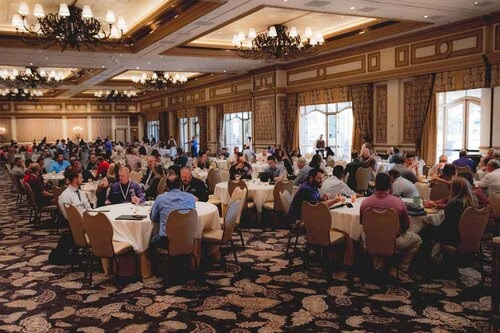
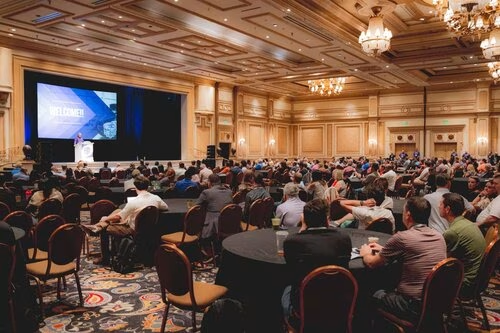
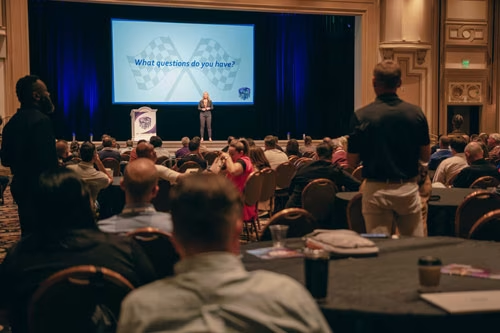
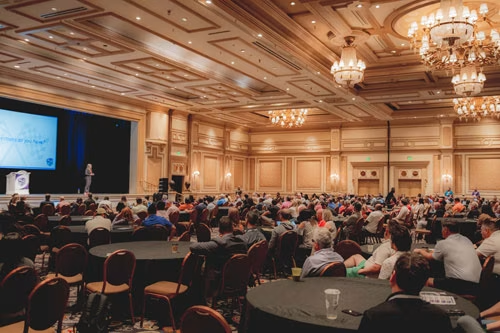
What Dealer Accounting Training and Education Covers
Dealer accounting is different from generic small business bookkeeping. Financing structures, deferred revenue, cost segregation, floorplan or capital facilities, reconditioning costs, sales tax, and collections posting rules all require industry specific skills. This training focuses on clarity, control, and cash flow. You will learn how to map your operational processes to clean accounting, so leadership can trust the numbers and act quickly.
- Chart of accounts design for retail, BHPH, LHPH, and subprime portfolios
- Month end close procedures, reconciliations, and variance analysis by store
- Posting rules for sales, collections, charge offs, recoveries, and repossessions
- Inventory, reconditioning, and parts accounting aligned with service operations
- Revenue recognition, reserve accounting, and portfolio performance reporting
- Internal controls, segregation of duties, audit readiness, and compliance mapping
Who Benefits From This Training
The curriculum is designed for accounting teams and leaders across independent and BHPH models. It can support single rooftop stores and multi location groups with shared services. Because processes span accounting, collections, and sales, we include cross functional practices to reduce rework and speed up month end.
- Owners, CFOs, controllers, and office managers
- Accounting staff new to dealerships or transitioning from retail to BHPH or LHPH
- Collections, underwriting, and portfolio leaders who rely on accurate posting
- Operations leaders seeking tighter store level P and L visibility
Core Modules In Dealer Accounting Training
Each module connects process documentation, controls, examples, and KPIs. Training aligns with daily, weekly, and month end cadences so your team can adopt improvements without disrupting operations.
1. Foundations and Chart of Accounts
Start with a flexible chart of accounts that separates inventory, reconditioning, sales, financing income, portfolio performance, and service operations. Map each DMS or payment platform feed to the correct accounts. Align posting rules and segments so every store, department, and product line can be reported consistently.
- Account structure for wholesale, retail, BHPH, and LHPH models
- COA templates for single store and multi store reporting
Explore deeper accounting specifics for BHPH financing in buy here pay here accounting education at buy-here-pay-here-accounting-education and used car dealer accounting topics at used-car-dealer-accounting-education.
2. Daily Posting and Cash Controls
Consistency in daily posting prevents month end surprises. Standardize cash drawer controls, deposit logs, and reconciliation sheets. Tie each receipt source to a documented posting workflow. For BHPH or LHPH, create clear rules for late fees, extensions, deferrals, charge offs, recoveries, and reinstatements.
- Cash and check handling controls with dual verification and logs
- Daily summary sheets that match bank activity and DMS reports
For integrated policy and posting alignment, see collections policy guidance at buy-here-pay-here-collections-policy-education and payment performance alignment at buy-here-pay-here-payment-performance-education.
3. Inventory, Reconditioning, and Cost Control
Inventory and recon drive gross and cash needs. Accounting should mirror operational checkpoints: acquisition, transport, mechanical recon, cosmetic recon, and front line. Use work in process accounts to capture recon cost in real time and push completed units into inventory with accurate cost. Tie every vendor bill to a unit to close gaps and reduce leakage.
- WIP aging and recon cycle time dashboards by vendor and store
- Rules for capitalization vs expense to keep margins consistent
For operational cross training, review inventory and pricing strategy resources at used-car-dealer-inventory-management-training and used-car-dealer-pricing-strategy-education.
4. Revenue Recognition and Portfolio Accounting
For retail deals, recognize revenue at delivery with appropriate cost of sales. For BHPH or LHPH portfolios, implement effective interest or practical methods aligned to your policy and auditor guidance. Maintain reserves, allowance for credit losses, charge off rules, and recovery accounting. Produce static pools, delinquency buckets, and loss curves that tie to the GL.
- Delinquency, roll rate, and loss reporting reconciled to general ledger
- Repossession and reinstatement entries with supporting documents
Strengthen portfolio reporting with guidance at buy-here-pay-here-portfolio-management-education and dealer-portfolio-management-education.
5. Close, Consolidation, and Audit Readiness
A disciplined close produces fast, reliable statements. Use a close checklist with ownership for bank reconciliations, floorplan or capital line reconciliations, intercompany eliminations, AR tie outs, AP aging, WIP rollforwards, and inventory reconciliations. Archive supporting documents for easy auditor access and regulatory reviews.
- Close calendar with day by day tasks and review signoffs
- Working paper structure that passes audit without rework
For regulatory and audit alignment, see used-car-dealer-regulatory-compliance-training, buy-here-pay-here-legal-compliance-education, and used-car-dealer-audit-preparedness-education.
Key Metrics and Reports for Dealers
Great accounting turns into great decision making. Standardize a one page scorecard for leadership, plus drill down reports for managers. Ensure every metric reconciles to the GL and operational systems to avoid debates and delays.
- Gross per unit, recon cost per unit, days to line, and inventory turn
- Cash conversion cycle, AP days, AR days, and working capital trends
- Delinquency, roll rates, charge offs, recoveries, and portfolio yield
- Store and department P and L with budget vs actual variances
For performance frameworks that engage managers, see dealer-performance-optimization-education and leadership development at dealer-leadership-development-training.
Technology and System Integration
Dealers often juggle a DMS, accounting system, payment platforms, bank feeds, and service systems. The goal is a controlled data flow that minimizes manual entry and preserves an audit trail. Define system of record for each dataset, schedule consistent imports, and reconcile batch totals to the GL. Configure user permissions and logs to protect cash and inventory data.
- Source to GL mapping with exception queues and balancing reports
- Month end data freeze policy with change controls
Explore technology training at used-car-dealer-technology-integration-training and dealer-technology-training-education.
Compliance Alignment and Documentation
Accounting supports compliance by maintaining accurate records, documented procedures, and consistent controls. Map your internal policies to federal and state requirements, including record retention, adverse action documentation, payment application, fees, and repossession handling. Build a living policy manual with version control and training logs.
- Procedure narratives for collections, payments, repossessions, and refunds
- Evidence folders for audits, including reconciliations and approvals
Useful references include dealer-compliance-best-practices, buy-here-pay-here-compliance-education, and independent-dealer-compliance-education.
People, Training Cadence, and Cross Department Alignment
Numbers improve when people align on process. Establish weekly cross functional huddles that include accounting, inventory, service, collections, and sales managers. Review exceptions, bottlenecks, and upcoming reconciliations. Assign owners to unresolved issues and close the loop in the next meeting. Use simple checklists and SOPs so new team members can contribute quickly.
- Role clarity for posting, reconciliation, approvals, and reporting
- Cross training matrix to protect the close when staff are out
For broader operations training, see used-car-dealer-operations-training, buy-here-pay-here-operations-training, and dealer-operations-management-training.
Regional Considerations
Tax and regulatory rules vary by state. Align sales tax, title and registration fees, and accounting for dealer fees to local requirements. When scaling across states, standardize your internal process but flag state specific exceptions in the SOPs to protect compliance and reporting consistency.
Regional resources: buy-here-pay-here-dealer-education-texas, buy-here-pay-here-dealer-education-florida, and subprime-dealer-education-florida.
Helpful Resources on This Site
Explore more dealer accounting training and education content, industry updates, and event based learning opportunities across our platform.
Dealer Accounting Training and Education FAQs
Continue Learning Across the Site
Build a complete development plan with related resources, including dealer-professional-development-training, dealer-operations-management-training, and insights on blog. For event based learning and peer sessions, see education-and-events. Organization details are available at about-us and policy information at privacy-policy.
