

Collections Training for Dealership Teams

Improve payment performance, reduce delinquency, and protect your dealership with practical Buy Here Pay Here collections training that works in the real world. This page explains proven processes your team can use to connect with customers early, resolve accounts faster, and maintain full compliance. From account onboarding to late-stage recovery, you will find step by step guidance, sample workflows, and recommended metrics designed for in house financing operations. Whether you are launching a new BHPH portfolio or leveling up an experienced collections department, you can build a consistent approach that is human, data driven, and legally sound. Explore best practices for call cadences, text and email strategies, payment options, extensions and deferments, repossession decisioning, reinstatement, and vendor management. Learn how coaching, scorecards, and QA improve collector performance and customer experience. Use these insights to stabilize cash flow and strengthen long term relationships, all while aligning with state and federal requirements.
Use this page to register members of your dealership ASAP!
ONLY $299 For Each Addt'l Dealership Attendee
CAESARS ROOMS DISCOUNTED TO $189 a night
(Plus Resort Fee)
This Buy Here Pay Here collections training resource is for independent dealers, in house finance operators, and portfolio managers who want repeatable results. Browse the education library, explore operations guides, and see related topics in the links below. You can also review compliance guidance, technology integration tips, and regional education support to round out your training plan and keep teams aligned across locations.

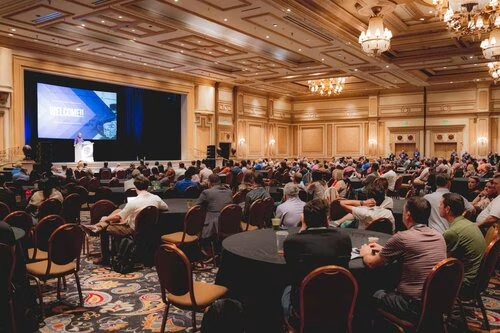
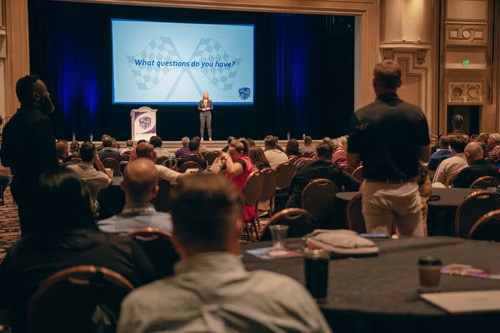
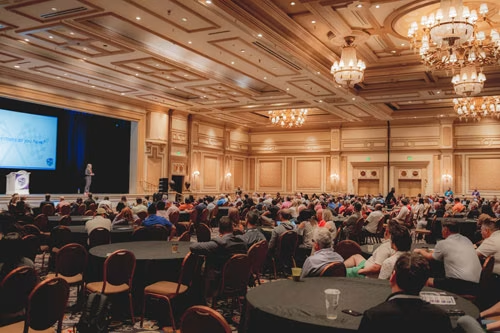
What Buy Here Pay Here Collections Training Covers
Effective BHPH collections training equips your team with the mindset, methods, and metrics to handle every phase of the account lifecycle. It blends customer empathy with disciplined follow up, consistent documentation, and compliance at each touchpoint. The outcome is a balanced portfolio with fewer roll rates, better promise kept percentages, stronger recovery, and a trusted brand that customers rely on when life changes.
Core Objectives
- Stabilize cash flow by reducing days past due and charge offs
- Standardize call, text, and email cadences for each delinquency stage
- Improve customer communication, documentation, and negotiation skills
- Align with FDCPA, UDAAP, FCRA, SCRA, TCPA, and state regulations
- Strengthen recovery strategies, reinstatement, and loss mitigation
Foundational Policies and Playbooks
Solid collections performance starts with clear policies and a playbook your team can follow on day one. Define roles, escalation paths, acceptable communications, hardship options, and documentation standards. Set the tone during account onboarding with payment expectations, due date alignment, and available channels for self service. Provide simple reference sheets for common scenarios like broken promises, partial payments, and extension requests so decisions stay consistent across collectors and locations.
Early Stage Delinquency Workflows 1 to 10 Days Past Due
Early engagement prevents roll. Aim to contact customers before they miss a due date and again within 24 to 48 hours of delinquency. Offer simple ways to pay including portal, text to pay, card on file when permissible, cash locations, and ACH. Use short, friendly scripts focused on solutions, not pressure. For example: I noticed your payment date is here. Would a one time date change to your payday help keep you current. Document all outreach, promises, and next actions in your CRM.
Mid Stage Delinquency 11 to 29 Days Past Due
As accounts age, increase the contact attempts across channels at compliant times and frequencies. Confirm the reason for delinquency, verify contact information, and set clear next steps with dates and amounts. Evaluate payment plans, split payments, or a short extension when it improves long term performance. Reinforce the benefits of staying on track such as warranty coverage, service discounts, or loyalty options if applicable to your program.
Late Stage Delinquency 30 to 59 Days Past Due
Late stage accounts require structured escalation. Confirm hardship documentation when offered, verify collateral location and insurance status, and consider field visits only with proper vendor oversight. If a repossession decision approaches, ensure every prerequisite step is documented and that state requirements are followed. Offer a clear path to reinstate when appropriate, outlining timeline, amounts due, and expectations going forward.
Repossession, Recovery, and Reinstatement
When recovery action is necessary, your process should be consistent, compliant, and customer aware. Select vendors with verifiable compliance training, insurance, and data security controls. Communicate notices and post sale accounting accurately and within statutory timelines. Provide reinstatement options that make economic sense for both customer and dealership, and track results to refine your policies. Recovery is not the finish line. Your goal is to resolve the asset and harvest clear learnings to improve underwriting and collections practices.
Communication Skills and Scripts
- Lead with empathy: I want to help you stay current and keep you in your vehicle.
- Ask open questions: What changed with your income or pay schedule this month.
- Confirm specifics: You will pay 125 on Friday by 3 pm via the portal. Is that correct.
- Set a next action: If we do not receive the payment, I will follow up by 10 am Monday.
Keep scripts short, compliant, and solution focused. Avoid language that could be considered unfair, deceptive, or abusive. Train collectors to summarize agreements back to the customer and record accurate notes in the system of record.
Compliance Guardrails
BHPH collections must follow federal and state rules that govern communication timing, consent, privacy, and content. Ensure your team understands FDCPA style best practices, UDAAP principles, fair credit reporting responsibilities when you furnish data, service member rights, and the requirements for text or auto dialed calls consent. Maintain written policies, provide recurring training, and audit random calls and messages for adherence. This page is educational and not legal advice. For specific legal interpretations, consult qualified counsel.
Technology, Data, and Automation
Strong collections programs use CRM queues, dialers, text platforms, payment portals, and IVR to reduce manual work and speed up right party contacts. Integrate data sources such as payment history, contact outcomes, and promise tracking to prioritize accounts. Use dashboards to visualize roll rates by bucket, promise kept percentage, RPC rate, average days to cure, extension impact, and charge off trends. Technology should amplify human connection, not replace it. Keep consent records and opt out management synchronized across tools.
Key KPIs and Benchmarks
- Current rate and 1 to 29 DPD roll rate
- RPC right party contact and CEI collector effectiveness index
- Promise to pay set and promise kept percentages
- Extensions and deferments usage and cure rate impact
- Charge off rate, net loss, and recovery percentage
Set realistic targets by portfolio vintage, contract structure, and market. Measure performance weekly and review with the team. Use the data to coach, adjust cadences, and update policies that do not drive results.
Staffing, Coaching, and Quality Assurance
Hire collectors who communicate clearly, handle pressure well, and show genuine care for customers. Provide a defined career path, incentives tied to compliant outcomes, and weekly coaching sessions based on call reviews. Implement a QA scorecard that evaluates tone, verification steps, solution framing, and documentation quality. Recognize top performers and share wins to reinforce best practices. Cross train team members on skip tracing, bankruptcy workflows, insurance claims, and post charge off recovery to maintain coverage when volumes spike.
Payment Options and Friction Reduction
Customers pay faster when options are simple. Offer online portals, mobile pay links, text to pay where allowed, recurring ACH with explicit authorization, and convenient cash networks. Encourage due date alignment with the customer pay cycle and automate reminders with consent. Use clear receipts and confirmations so customers trust the process. Reduce barriers by allowing partial payments that lead to cure plans, and provide transparent policies on fees and extensions.
Vendor Oversight and Data Security
If you use third parties for skip tracing, repossession, or payment processing, require written agreements, security controls, and proof of insurance. Limit access to only the data required to perform the task. Review performance, complaints, and audit findings at least quarterly. Keep call recordings and customer documents secured with role based access and retention schedules aligned with your policy and regulatory guidance.
Multi Location Consistency
Groups with multiple rooftops should standardize training, scripts, and reporting. Host regular peer reviews across stores to compare results and share tactics. Centralize parts of the process such as texting or queue management while allowing local teams to handle sensitive conversations. Consistency builds brand trust and helps new team members become productive faster.
How This Training Integrates With Broader Dealer Education
Collections does not operate in a vacuum. Strong underwriting, realistic PTI and LTV, accurate pricing, and service support all influence payment performance. Use the related education tracks to align sales, finance, service, accounting, and leadership around shared goals. When each function understands how its decisions affect portfolio health, your BHPH operation becomes predictable and scalable.
Related Education and Resources
- buy-here-pay-here-real-world-collections-training
- buy-here-pay-here-collections-best-practices
- dealer-collections-training
- buy-here-pay-here-operations-training
- buy-here-pay-here-compliance-education
- used-car-dealer-operations-best-practices
- subprime-real-world-collections-training
- buy-here-pay-here-regulatory-guidance
- blog | about-us | contact-us | home
Getting Started With Your Training Plan
Begin with a baseline assessment of your current processes and KPIs. Identify the top three friction points affecting cure rates such as limited contact methods, unclear hardship policies, or inconsistent documentation. Roll out quick wins in two week cycles, then layer in advanced modules like vendor oversight and multi location reporting. Reinforce progress through weekly coaching and QA reviews. With a consistent playbook and clear metrics, your team will collect with confidence and protect customer relationships for the long term.
