

Management Education for Independent Dealers

Lease Here Pay Here risk management education helps independent and used car dealers reduce losses, protect collateral, and grow a healthier portfolio. This page brings together practical training concepts your team can apply on day one, from credit policy and lease structure to collections, compliance, and portfolio analytics. If you manage a lease here pay here model, you face unique variables like residual risk, vehicle return processes, and state leasing rules. We focus on proven guardrails that lower delinquency and charge offs without sacrificing customer experience. Explore connected resources like lease-here-pay-here-dealer-education, lease-here-pay-here-compliance-education, and lease-here-pay-here-portfolio-management-training, plus broader dealer insights on blog and upcoming learning opportunities in education-and-events. Build confidence in your underwriting, collections, and monitoring processes while aligning your team to measurable performance goals.
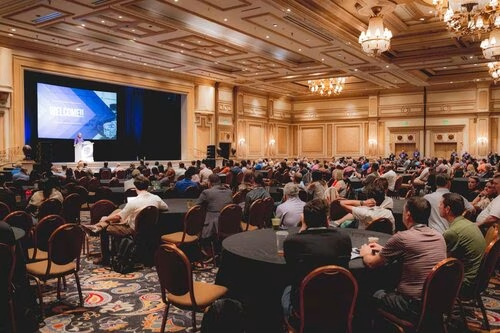
Use this page to register members of your dealership ASAP!
ONLY $299 For Each Addt'l Dealership Attendee
CAESARS ROOMS DISCOUNTED TO $189 a night
(Plus Resort Fee)
Whether you operate a single rooftop or multi location platform, the right lease here pay here risk controls can stabilize cash flow and improve customer retention. Use this guide to benchmark your policy, fill training gaps, and create a repeatable playbook. Continue learning with resources like lease-here-pay-here-operations-best-practices, dealer-risk-management-training, and foundational primers in used-car-dealer-education.



Lease Here Pay Here risk management is about creating predictable outcomes across the full lifecycle of the lease. Unlike retail installment Buy Here Pay Here, Lease Here Pay Here introduces additional variables such as residual value exposure, mileage and wear policies, early termination paths, and the vehicle return process. Each variable can either control risk or amplify it. The goal of this education is to help you turn policy into performance through clear standards, coaching, and measurement.
Core pillars of Lease Here Pay Here risk
Use the following pillars to design or refine a policy that aligns credit quality, lease structure, and operational execution. Each pillar includes linked resources for deeper study.
1. Credit policy and underwriting
Your credit policy should consistently evaluate ability, stability, and willingness to pay. Define thresholds and documentation for income verification, time on job, time at residence, references, and bank statements when available. Monitor key ratios like payment to income and debt to income. For subprime leasing, stability often predicts payment performance more reliably than raw score bands. Incorporate scorecards or tiers, but allow documented exceptions to follow a controlled escalation path. Learn more in lease-here-pay-here-credit-policy-education and buy-here-pay-here-underwriting-education.
2. Lease structure and pricing discipline
Well structured leases reduce delinquency and loss severity. Align term and mileage allowances to the vehicle’s actual condition and expected life. Set residual assumptions realistically to avoid negative equity at turn in. Keep upfront fees transparent and manageable. Build a pricing model that considers recon investment, expected repairs, and market demand while targeting a sustainable effective yield. See lease-here-pay-here-lease-structure-education and lease-here-pay-here-pricing-strategy-training.
3. Inventory and collateral alignment
Choose vehicles that fit your customer’s budget and maintenance reality. Balance acquisition price, reconditioning cost, and expected warranty or service plan coverage. Maintain accurate ACV and book values and update them if condition changes. Prioritize makes and models with known parts availability and lower cost of ownership. Inventory strategy impacts residuals and return condition risk. Explore used-car-dealer-inventory-management-training and buy-here-pay-here-vehicle-acquisition-training.
4. Payment performance and collections
Build a proactive collections cadence that emphasizes early contact, clear promises, and documented follow through. Multi channel outreach helps but must comply with communication laws. Offer practical payment methods like in person, kiosk, ACH, card on file, and text to pay where compliant. GPS and starter interrupt devices can reduce skip loss but require careful consent and state rule alignment. Create structured hardship and extension policies with clear limits and documentation. When repossession is necessary, follow consistent, compliant steps and use a fair reinstatement offer when possible. See lease-here-pay-here-collections-training, buy-here-pay-here-repo-process-education, buy-here-pay-here-reinstatement-strategy-training, and lease-here-pay-here-payment-performance-education.
5. Compliance and regulatory risk
LHPH operators navigate federal and state laws that govern advertising, application and underwriting, communications, collections, credit reporting, data security, and lease specific disclosures. Establish written policies for ECOA, FCRA, GLBA Safeguards, UDAP, data privacy, adverse action handling, and credit reporting accuracy. Maintain state specific lease disclosures, early termination options, fee schedules, and return checklists. Train staff, monitor, and keep audit trails. Reference lease-here-pay-here-compliance-education, lease-here-pay-here-regulatory-compliance-training, lease-here-pay-here-audit-readiness-education, and independent-dealer-compliance-education.
6. Insurance and collateral protection
Set clear coverage requirements and real time verification at delivery and throughout the term. Consider collateral protection products like CPI or VSI where allowed, with transparent disclosure. Create a standard claims process, including total loss handling and settlement application against remaining lease obligations. Review vendor contracts and maintain SOC reports or equivalent documentation where appropriate. See guidance in dealer-risk-management-training.
7. Portfolio analytics and early warning
Track a scorecard that blends leading indicators and lagging results. Useful metrics include 0 to 29, 30 to 59, and 60 plus day delinquency, roll rate, payment to income distribution, extension usage and outcomes, unit level static pool cumulative loss, charge off rate and loss severity, recovery ratio, and repossession to reinstatement conversion. Segment by store, collector, underwriting tier, vehicle segment, and term to uncover coaching opportunities. Learn methods in lease-here-pay-here-portfolio-management-training, dealer-portfolio-management-education, and buy-here-pay-here-portfolio-performance-training.
8. Capital, liquidity, and provisioning
Build a rolling cash flow model that incorporates advance rates, curtailments, expected charge offs, and recoveries. Maintain adequate loss reserves and stress test your plan for macro scenarios like used car price normalization or loss rate spikes. Monitor lender covenants and recon costs closely. Align growth rate with staff capacity and collections bandwidth. Explore lease-here-pay-here-capital-strategy-education and dealer-capital-strategy-education.
9. Operational readiness and people
Policy only works when people can execute. Provide role based training, call guides, payment scripts, documentation standards, and QA reviews. Align incentives to portfolio outcomes, not just originations. Coach to behaviors early, record results, and share wins across the team. Strengthen frontline leadership with consistent one on ones and calibration. Resources include lease-here-pay-here-operations-training, lease-here-pay-here-leadership-training, and buy-here-pay-here-staff-training-development.
10. Technology, data, and security
Integrate your DMS, CRM, payment processor, dialer, and credit reporting to reduce manual work and error. Enforce least privilege access and multi factor authentication. Maintain incident response and vendor oversight processes. Train staff on data handling and phishing awareness. See lease-here-pay-here-technology-integration-training, dealer-technology-training-education, and used-car-dealer-technology-integration-training.
Quick risk assessment checklist
- Defined underwriting tiers with written PTI and DTI thresholds and a tracked exception log
- Standard lease structure by tier including term, residual assumptions, and mileage policy
- Inventory guidelines that align ACV, recon cap, and expected service coverage to customer budget
- Payment options that match customer habits plus compliant communication permissions
- Collections playbook with early contact cadence, promise tracking, and hardship policy
- Repossession and reinstatement standards with vendor scorecards and recovery metrics
- Compliance program with state specific lease disclosures, adverse action, and audit trails
- Insurance verification workflow and collateral protection process with clear disclosures
- Portfolio dashboard tracking delinquency buckets, roll rates, static pool loss, and severity
- Cash flow forecast with loss provisioning and covenant monitoring
- Role based training, QA reviews, and incentive alignment to portfolio outcomes
- Technology integrations, access controls, and data security training
A practical example
A dealer notices 60 plus day delinquency climbing from 7 percent to 10 percent over two quarters. Static pool analysis shows higher loss severity among deals with payment to income above 22 percent. The team updates the tiered PTI ceiling from 23 percent to 20 percent and limits terms above 36 months for vehicles with high maintenance volatility. Collections shifts to day zero reminders and adds compliant text to pay. Within 90 days, 30 to 59 day delinquency falls 1.5 points and roll rates into 60 plus drop accordingly. Loss severity improves 9 percent over the next two static pools due to faster right party contacts and clearer reinstatement offers. The takeaway is simple. Align origination and collections policies to the customer’s real budget and deploy early contact at scale.
State specific considerations
State leasing rules, fee caps, and device limitations vary. Train your team on local requirements and maintain a compliance matrix. For region focused learning, explore lease-here-pay-here-dealer-education-texas, lease-here-pay-here-dealer-education-florida, and lease-here-pay-here-dealer-education-north-carolina, along with broader guidance in state-compliance-education-for-dealers.
Deepen your learning
Risk management is not a one time project. It is a rhythm of training, monitoring, and improvement. Encourage cross functional collaboration so sales, underwriting, collections, service, and accounting see the same scorecard and speak the same language. Reinforce wins, investigate exceptions, and keep policies refreshed as market conditions change. For more insights, see dealer-industry-insights-education and ongoing articles on blog.
Lease Here Pay Here Risk Management FAQs
When your Lease Here Pay Here risk management program aligns origination, structure, compliance, collections, and analytics, performance becomes more predictable. Use the linked lessons to calibrate your playbook and revisit your metrics monthly. For more insights and case studies, review dealer-workshops-and-training and industry updates on blog.
