

Collections Training for Used Car Dealers

Strong Lease Here Pay Here collections do not happen by accident. They are built through daily discipline, clear policies, accountable teams, and tools that fit the realities of subprime automotive customers. This page unpacks real world collections training designed specifically for used car dealers running a Lease Here Pay Here model. Learn how to construct a policy that protects revenue, coach collectors to consistent results, streamline compliance, and align technology with your workflow. Discover scripts that earn payments without friction, field strategies that keep visits safe and productive, and scorecards that spotlight what to fix first. Whether you are launching LHPH or optimizing a mature portfolio, you will find practical guidance that translates to higher payment performance, lower charge offs, and better customer relationships. Explore related dealer education resources across operations, risk, and compliance to round out a complete collections system that is repeatable and scalable.
Use this page to register members of your dealership ASAP!
ONLY $299 For Each Addt'l Dealership Attendee
CAESARS ROOMS DISCOUNTED TO $189 a night
(Plus Resort Fee)
Effective Lease Here Pay Here collections balance empathy, structure, and compliance. The right policy, training cadence, and tech stack let small teams manage large portfolios without burnout. Use the frameworks below to sharpen daily calls, prioritize accounts, reduce skips, and document every step. Align your repossession and reinstatement processes so outcomes are consistent, auditable, and fair.

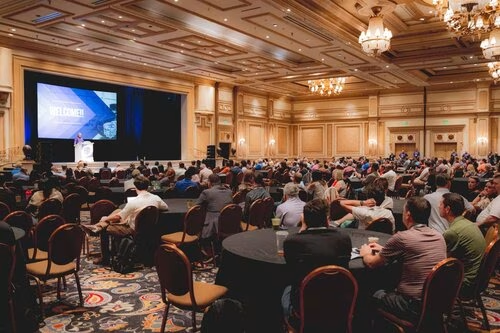
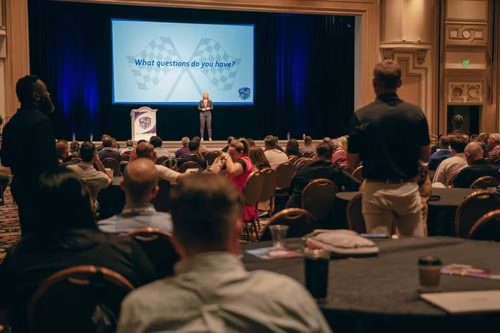
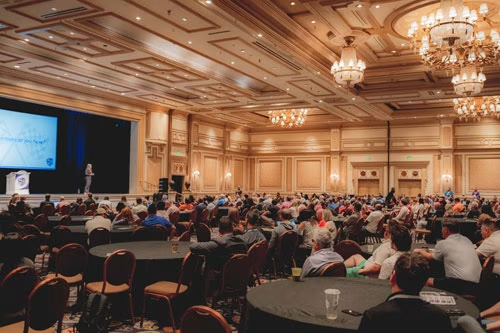
What Real World LHPH Collections Training Covers
Real world training bridges the gap between classroom theory and what actually happens when a customer misses a payment, a phone number changes, or a GPS ping goes silent. Collections excellence is not a single tactic. It is a system that integrates people, process, policy, and platforms. The modules below help a used car dealer build or refine that system so every collector knows what to do next and why it matters.
1. Core Policy and Playbook
Your collections policy is your playbook. It defines when to call, text, email, or visit, what to say, what to document, and how to escalate. For Lease Here Pay Here, the policy must also address lease specific elements like mileage limits, wear and tear, and return options while aligning with state lease regulations. Build the policy with the end in mind. Aim for clear definitions of delinquency stages, standard promise to pay rules, extensions and deferrals criteria, charge off thresholds, and reinstatement options after default or recovery.
- Plain language definitions for grace period, default, and right to cure that match your lease agreement
- Communication ladder by day late with scripts and documentation rules for each contact type
- Objective criteria for extensions, deferrals, and partial payments with approval levels
- GPS and starter interrupt usage rules, including exception handling and audit notes
2. High Yield Daily Workflow
Top performing LHPH collectors follow a daily rhythm that protects the current day first, then tackles the past due list by risk. Prioritize accounts by risk score, payment amount, past behavior, and employment verification. Use power hours to focus on right party connects when customers are most reachable. End each day with a clean promise board and escalations documented for the next morning.
- Segment by 1 to 3 days late, 4 to 10 days late, 11 to 29 days late, 30 plus days late with distinct goals for each bucket
- Set call blocks for early mornings, mid day employer breaks, and early evening windows
- Use queue rules that auto advance the next best account to contact and prevent cherry picking
3. Conversation Frameworks and Scripts
Scripts are not about reading lines. They provide structure so collectors set a professional tone, confirm facts, handle objections, and secure clear commitments. For LHPH, reinforce that the customer is leasing the vehicle and that keeping the lease current preserves flexibility and vehicle access.
- Opening: identity verification, quick rapport, reason for call, concise impact of delinquency
- Explore: ask what changed since the last on time payment, confirm employment and pay dates
- Solve: offer the smallest acceptable catch up plan that matches actual cash flow timing
- Close: restate amount, channel, date, and consequence. Log the promise and next step
4. Field Strategy for Safe, Productive Visits
Not every account requires a field visit, but when it does, safety and documentation come first. Train staff to use two person visits where appropriate, remain professional, avoid confrontation, and never enter private property without permission. Use GPS location history only as a lead, not a certainty. When contact is made, aim for a dated promise with confirmation text or a same day payment through secure channels. If the vehicle qualifies for recovery, ensure your policy aligns with state repossession rules for leased vehicles and that every step is time stamped and documented.
5. Compliance and Documentation
Compliance is not a separate activity. It should be embedded in every collection step. Align with federal requirements including fair debt collection, telephone and texting rules, credit reporting accuracy if you report, and adverse action where applicable. For Lease Here Pay Here, confirm state specific lease disclosures, right to cure, and recovery notices. Train staff on recording consent, call monitoring disclaimers where required, and secure storage of personally identifiable information. Create a documentation checklist so audits are simple and consistent.
- Standard note template that captures date, time, channel, identity verification, summary, and next action
- Automated time stamps for all account changes, GPS events, promises, and deferral approvals
- Quarterly policy refresh and staff sign off with quick scenario quizzes
6. Metrics That Matter
Use a small set of leading and lagging indicators. Leading indicators guide daily actions. Lagging indicators tell you if the system is working. Publish a team scoreboard weekly and a portfolio dashboard monthly. Review results in a short stand up to reinforce wins and correct drift fast.
- Leading: right party contact rate, promises kept rate, days to first contact, same day resolution rate, average days past due by bucket
- Lagging: payment performance percentage, roll rate by bucket, repossession rate, reinstatement rate, net loss after recovery, cost per collected dollar
7. Technology Enablement
Your DMS, dialer, payment processor, GPS platform, and communication tools should work like one system. Set up event driven alerts for broken promises, job changes, and new addresses. Put the payment link and QR code in every text and email template. Use restricted user roles so collectors see what they need and managers can audit everything. Integrate your complaint log and compliance checklist into the account screen so nothing is missed.
- Click to call and text with automatic note creation and call recording where permitted with consent
- Promise boards that auto update aging and trigger reminders before the due hour, not just the due day
- GPS health checks and battery alerts reviewed during morning huddles for high risk accounts
8. Repossession, Return, and Reinstatement
For Lease Here Pay Here, the path from late to recovery should be predictable and fair. Define clear criteria for when a vehicle is eligible for recovery, how voluntary returns are handled, and what a customer must do to reinstate. Partner with vetted recovery agents who understand lease nuances and provide compliant notices. Track redemption timelines, storage fees, and personal property handling in alignment with state rules. Keep a reinstatement matrix with required down payment, fees, and proof of capacity so collectors can communicate options accurately.
9. Coaching and Skill Development
Great collectors are trained, observed, and coached. Use call calibrations weekly. Pick three calls, score them against your script, and discuss what to keep and what to adjust. Role play difficult scenarios like broken promises, aggressive language, or job loss conversations. Celebrate promises kept, not just dollars collected. Provide a career path from junior collector to senior collector to team lead with clear competency milestones. Mix microlearning modules with live workshops so skills are built and retained.
10. Cross Department Alignment
Collections success begins before the customer takes delivery. Work with underwriting to confirm ability to pay and with sales to set the right expectations. Service should share repair timelines that affect transportation and payment plans. Accounting should reconcile payment channels daily so collectors always see accurate balances. Leadership should set targets that reward normalized portfolio health, not short term spikes.
11. Practical Scenarios
Job change with gap between paychecks. Confirm new pay date and set a bridge plan with two smaller payments tied to those dates. Document employer and shift changes. Broken promise after a deferral. Reassess capacity and require a larger immediate payment before granting any future relief. Note the reason for deferral failure. GPS shows movement but no contact. Verify device status, attempt alternate contacts, and schedule a safe field visit if policy criteria are met. Customer requests a voluntary return. Explain process, confirm location and keys, and document condition and mileage. Provide a clear reinstatement path in writing if applicable.
Related Dealer Education
Explore focused training and education that strengthens your entire operation. The pages below complement LHPH collections with deeper dives into operations, compliance, portfolio, and customer communication.
- Lease Here Pay Here Collections Training
- Lease Here Pay Here Operations Training
- Lease Here Pay Here Regulatory Compliance Training
- Dealer Collections Training
- Dealer Portfolio Management Education
- Buy Here Pay Here Collections Training
- Buy Here Pay Here Compliance Best Practices
- Used Car Dealer Education
Helpful Resources
Stay current with regulatory shifts, practical tactics, and peer insights that impact LHPH collections and overall dealership operations.
Key Takeaways
A consistent collections policy, a focused daily rhythm, and a coached team create predictable Lease Here Pay Here results. Use short scripts that secure clear promises, measure what matters, and document every action. When you integrate technology and compliance into your workflow, you reduce roll rates, improve payment performance, and protect customer relationships. Real world training turns these ideas into habits your team can sustain.
