

Here Dealer Operations Guidance

Operate your Lease Here Pay Here dealership with confidence using this comprehensive dealer operations guidance. Whether you are launching a new LHPH program or optimizing a mature portfolio, this page delivers practical steps for underwriting, compliance, collections, service, accounting, and technology integration. You will find proven best practices for structuring leases, pricing vehicles and payments, managing risk, and improving customer performance across the life of the lease. Explore links to deep dive training and regional education so your team can standardize processes, reduce losses, and scale responsibly. Use this resource to align your people, policy, and technology around a consistent operating model that drives profitable growth while maintaining strong regulatory discipline. When you are ready to take the next step, explore the in depth resources linked throughout this page to keep your LHPH operation on track and future ready.
Use this page to register members of your dealership ASAP!
ONLY $299 For Each Addt'l Dealership Attendee
CAESARS ROOMS DISCOUNTED TO $189 a night
(Plus Resort Fee)
This Lease Here Pay Here operations guidance emphasizes real world execution. From credit policy design to end of term vehicle returns, you will see actionable checkpoints you can implement immediately. Follow the links to specialized training in collections strategy, portfolio management, capital planning, and legal compliance tailored to independent dealers and LHPH operators. Build repeatable processes, upskill your staff, and benchmark performance with confidence.

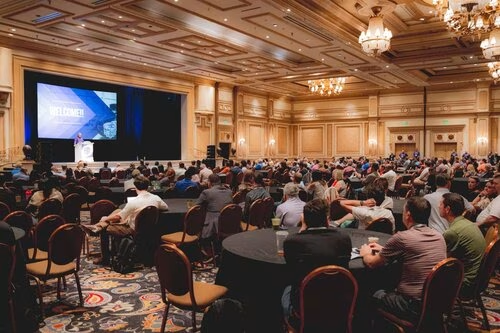
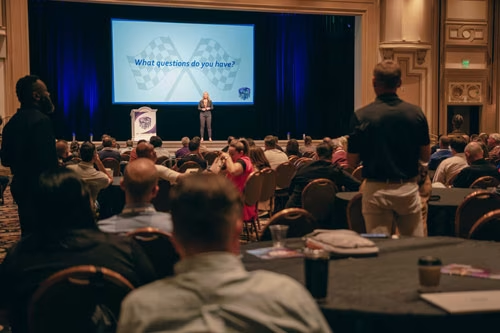
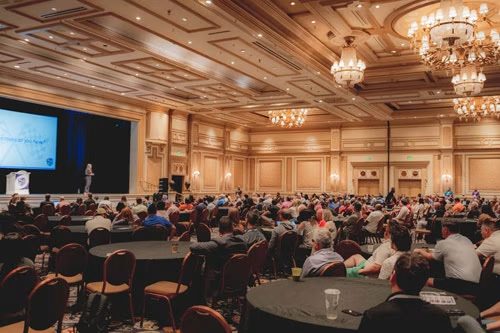
What Lease Here Pay Here Dealer Operations Guidance Covers
Lease Here Pay Here is distinct from retail financing and from traditional Buy Here Pay Here. Lease accounting, term structure, residual setting, disclosures, and end of term processes require a tailored operating model. Strong dealer operations integrate five pillars: policy, people, process, platform, and performance. The guidance below walks your team through each pillar with execution level detail and links to targeted education so you can move from strategy to repeatable daily practice.
1. Policy: Credit, Pricing, and Lease Structure
Clarity in policy reduces variance and improves portfolio results. Start by defining your lane: customer profile, vehicle bands, advance caps, payment to income thresholds, and residual methodology. Align these with your capital cost and desired return.
- Create a written credit policy that defines minimum documentation, verification steps, and allowable exceptions. See lease-here-pay-here-credit-policy-education for deeper guidance.
- Use data driven pricing that considers reconditioning, expected term, mileage, and residual risk. Explore used-car-dealer-pricing-strategy-education for pricing frameworks.
- Document lease structure rules including money factors, fees, optional products, and residual setting bands. Pair with lease-here-pay-here-lease-structure-education.
2. People: Training, Role Clarity, and Accountability
Your managers and front line teams must execute policy consistently. Define roles for sales, underwriting, funding, collections, service, and accounting. Build training paths for new hires and ongoing development with measured competencies.
- Upskill leaders with lease-here-pay-here-leadership-training and dealer-leadership-development-training to standardize coaching and performance management.
- Train sales to set payment expectations and align customers to the right vehicle and term. See lease-here-pay-here-sales-process-training.
- Establish cross training between underwriting and collections to reduce early defaults. Reference lease-here-pay-here-collections-training and dealer-underwriting-education.
3. Process: From Lead to End of Term
Map each workflow from first contact through renewal or return. Use checklists and quality controls to manage exceptions at the right level. A clean handoff between departments lowers friction and improves customer outcomes.
- Lead handling and appointment setting with clear show and close targets. Pair with buy-here-pay-here-sales-process-training for scripts and tracking.
- Underwriting with income and residence verification, budget fit, and stip management. Align to buy-here-pay-here-underwriting-education for audit ready files.
- Funding and onboarding that sets payment expectations and educates on maintenance and return policies. See lease-here-pay-here-payment-performance-education.
- Servicing and maintenance coordination to protect collateral and customer satisfaction. Learn more in lease-here-pay-here-service-operations-training.
- End of term options, including renewals, buyouts where applicable, and vehicle return process. Review lease-here-pay-here-vehicle-return-process-training.
4. Platform: Technology, Data, and Integrations
Your DMS or LMS should support lease specific fields, residual tracking, payment application rules, and reporting. Integrate eSignature, payment processing, GPS, and communication tools with clear ownership for data quality.
- Select systems that support lease accounting and amortization schedules. See lease-here-pay-here-technology-integration-training.
- Implement omnichannel payment options and automated reminders. Reference buy-here-pay-here-payment-processing-training.
- Capture operational dashboards for delinquency, roll rates, extensions, renewals, and recovery. Explore buy-here-pay-here-portfolio-performance-training.
5. Performance: Metrics, Reviews, and Continuous Improvement
Measure leading and lagging indicators, set targets, and run weekly reviews. Standardize exception authority and maintain a monthly policy committee to review trends and adjust quickly.
- Track approvals, WAAP, first payment defaults, 0 to 30 day roll, and cure rates. See lease-here-pay-here-portfolio-management-training for metric definitions.
- Monitor recovery, reconditioning turns, and net loss on returns. Pair with buy-here-pay-here-portfolio-recovery-education.
- Review branch scorecards and accountability plans. Learn more in buy-here-pay-here-dealer-performance-education.
Compliance and Audit Readiness
LHPH operations must align with federal and state regulations, disclosures, adverse action and ECOA, collections communication standards, privacy, and record retention. Prepare for audits with documented processes, completed checklists, and training logs. Build a compliance management system that assigns responsibility, documents policies, trains staff, monitors performance, and responds to findings.
- Start with lease-here-pay-here-compliance-education and dealer-compliance-best-practices to establish your CMS framework.
- Use federal-compliance-training-for-dealers and state-compliance-education-for-dealers for jurisdiction specific requirements and disclosures.
- Prepare files using buy-here-pay-here-audit-preparedness-training and lease-here-pay-here-audit-readiness-education to reduce findings.
Collections Excellence for LHPH
Because lease contracts depend on consistent payment behavior and asset preservation, collections discipline is central to profitability. Align staffing to call cadence, field work, extension policy, and payment options. Leverage early intervention to limit roll and reduce charge offs. Train on empathetic but firm communication that sets clear next steps and timelines.
- Use scripts and scorecards from lease-here-pay-here-collections-training and buy-here-pay-here-real-world-collections-training.
- Implement GPS and contact management tools with compliant workflows. See buy-here-pay-here-payment-enforcement-training.
- Define repossession, reinstatement, and return guidelines. Review buy-here-pay-here-repo-process-education and buy-here-pay-here-reinstatement-strategy-training.
Inventory and Service Operations
Right car, right cost, right turn. Residual risk and end of term value are influenced by acquisition choices and service discipline. Target vehicles with predictable maintenance and strong remarketing demand. Standardize inspections and reconditioning steps to reduce surprises and keep customers on the road.
- Build sourcing scorecards with buy-here-pay-here-vehicle-acquisition-training.
- Improve turns and cost control with buy-here-pay-here-inventory-management-education and used-car-dealer-inventory-management-training.
- Optimize shop workflow and warranties via lease-here-pay-here-service-operations-training.
Accounting, Reporting, and Capital Strategy
Lease accounting differs from retail installment accounting. Ensure your chart of accounts, revenue recognition, and residual handling align with your tax and reporting requirements. Maintain lender ready reporting that shows performance trends and risk controls. Match capital to term and cash flow with diversified funding sources.
- Train your back office with lease-here-pay-here-accounting-education and dealer-accounting-training-education.
- Develop a funding roadmap using lease-here-pay-here-capital-strategy-education and dealer-capital-strategy-education.
- Benchmark profitability with lease-here-pay-here-profitability-training and dealer-profitability-training.
Marketing and Customer Experience
Set accurate expectations from the start and market your value proposition clearly. Emphasize vehicle reliability, flexible payments, transparent terms, and a supportive service experience. Build referral flywheels by keeping customers on the road and communicating proactively about maintenance and payments.
- Create targeted campaigns with lease-here-pay-here-marketing-strategy-education and dealer-marketing-training-education.
- Improve retention with lease-here-pay-here-customer-retention-training and buy-here-pay-here-customer-retention-training.
Regional and Event Based Learning
Deepen your knowledge through events, workshops, and regional training. Engage with peers, benchmark your KPIs, and return with templates you can implement immediately.
- Attend education-and-events and dealer-workshops-and-training for hands on sessions.
- Explore summit-agenda, 2025-event-agenda, and 2025-featured-speakers for upcoming topics.
- Find travel options at discounted-airfare and connect with peers via meet-us.
Helpful Links and Resources
Use these internal resources to expand or specialize your training plan.
FAQ: Lease Here Pay Here Dealer Operations Guidance
Next Steps for Your Team
Use this guidance as your blueprint. Select one pillar to improve this week, assign an owner, and link the team to the relevant training resources on this site. Document before and after metrics so you can quantify impact. Continue with quarterly policy reviews, monthly KPI scorecards, and weekly coaching huddles to reinforce consistency. As your operation matures, expand into multi location standardization and succession planning using buy-here-pay-here-multi-location-operations-training and buy-here-pay-here-dealer-succession-planning.
