

Education: Practical Insights for Dealers
Buy Here Pay Here industry education helps independent and used car dealers build stronger in house financing programs while improving compliance, risk, and customer outcomes. This page brings together practical guidance, terminology, and best practices that leaders use to design, operate, and scale profitable BHPH portfolios. Whether you are evaluating a BHPH launch, tuning underwriting and collections, or aligning store operations with regulatory expectations, you will find clear, actionable insights here. Explore foundational concepts, role specific learning paths, and links to deeper training across underwriting, payment performance, collections strategy, inventory, and technology integration. If your goal is fewer charge offs, healthier cash flow, and consistent customer communication, this education hub will guide your next steps. For expanded topics, visit related training such as operations, compliance, and profitability to round out a complete BHPH playbook.
Use this page to register members of your dealership ASAP!
ONLY $299 For Each Addt'l Dealership Attendee
CAESARS ROOMS DISCOUNTED TO $189 a night
(Plus Resort Fee)
Strong BHPH programs balance disciplined credit policy, transparent disclosures, rigorous collections workflows, and data driven portfolio management. The resources on this page connect you to proven processes and real world examples used by successful operators. Use the linked guides and workshops to refine your store, team, and capital approach with confidence.
What Buy Here Pay Here Means for Dealers
Buy Here Pay Here is an in house financing model where a dealership originates, services, and collects retail installment contracts directly with customers. For many independent dealers, BHPH enables sales growth by serving credit challenged buyers while controlling underwriting standards and payment servicing. The tradeoff is added operational complexity and risk. Effective education reduces that risk by aligning people, process, and technology around clear targets for affordability, compliance, and payment performance.
Core Pillars of BHPH Excellence
Top performing BHPH operations tend to master a common set of disciplines. Use the outline below to benchmark your current approach and identify learning priorities that fit your store size, market, and capital constraints.
- Credit policy and underwriting that match payment to verified ability to pay, with structured stipulation checklists and consistent approvals
- Transparent compliance practices from advertising through delivery, including disclosures, privacy, and fair servicing standards
- Collections strategy that blends early engagement, payment options, and respectful recovery processes supported by clear policies
- Portfolio analytics tracking delinquency, roll rates, loss severity, static pool performance, and recoveries for continuous improvement
- Inventory and recon standards aligned to realistic ACV, payment to income, and cost to collect to prevent avoidable defaults
- Team training for sales, F and I, collections, and service to ensure consistent processes and customer communication
Getting Started: Foundational Learning Path
If you are new to the model or formalizing processes for a growing portfolio, start with the fundamentals and build depth topic by topic. The following linked resources map to common milestones in a BHPH launch or refresh.
- Overview of BHPH roles and responsibilities: BHPH Dealer Education
- Day to day store routines and KPIs: BHPH Operations Training and Operations Best Practices
- Regulatory grounding and audits: BHPH Compliance Education and Federal Compliance Education
- Payment performance and customer contact: BHPH Collections Training and Payment Performance Education
- Portfolio analytics and recovery: Portfolio Management Education and Portfolio Performance Training
Underwriting That Protects Customers and Capital
Sound underwriting starts with documented affordability checks and consistent verification. Build a written credit policy with clear approval tiers, maximum payment to income thresholds, and realistic down payment guidance. Align term lengths, interest, and vehicle ACV so customers can succeed without over extension. Consider payment scheduling that fits pay cycles and include autopay or mobile options to reduce friction. Standardize stips such as proof of income, residency, references, and insurance. Train team members to explain terms plainly and confirm customer understanding at delivery. This combination reduces early stage delinquencies and supports long term portfolio health. For template policies and training aids, see BHPH Underwriting Education and BHPH Credit Policy Education.
Compliance You Can Operationalize
Compliance works best when it is baked into daily workflows rather than handled as a one time project. Document the customer journey from first ad to final payment. Map each step to required disclosures, privacy notices, and adverse action processes. Use checklists in sales, F and I, and collections to create audit trails. Train managers to review sample files weekly and coach the team. Keep advertising transparent and accurate across web and social. Standardize adverse action notices and consistent ecoa handling. For guidance, explore Legal Compliance Education, Compliance Best Practices, and Used Car Dealer Regulatory Compliance Training.
Collections That Build Relationships and Results
Effective collections begins with early, respectful communication and clear expectations at delivery. Use multi channel outreach with text, phone, email, and portals. Establish grace periods and hardship options that follow policy, not improvisation. Train collectors to identify root causes, offer short term solutions, and document every promise to pay. Monitor roll rates by bucket and track cures to understand which actions have the highest impact. Strengthen late stage processes including extensions, rewrites, and recovery decisions based on data. For deeper playbooks, visit Collections Best Practices, Repo Process Education, and Loss Mitigation Training.
Inventory and Service Alignment
The right vehicle at the right price underpins payment performance. Choose inventory that fits local demand, modest recon costs, and supports dependable transportation. Match ACV and recon limits to your average contract size and down payment range. Capture recon thoroughly, confirm warranty or service contract coverage, and communicate expectations at delivery. Strong service department coordination reduces preventable charge offs and supports customer satisfaction. Dive deeper with Vehicle Acquisition Training and Service Operations Training, as well as broader Used Car Dealer Inventory Management Training.
Technology and Data Visibility
Technology integration accelerates accuracy, controls, and insights across the BHPH lifecycle. Use a DMS and CRM that share customer data, automate reminders, and flag policy exceptions. Payment tools should support autopay, cash alternative options, and real time posting. Dashboards tracking static pool performance, delinquency by bucket, average days to repo, and recovery rates help leaders coach in the moment. Integrations can also streamline compliance evidence with time stamped disclosures and e signature. For roadmaps and vendor selection guidance, see BHPH Technology Integration Education and Dealer Technology Training Education.
People Development and Leadership
Process consistency improves when leaders coach regularly and teams share a common language. Define role competencies for sales, F and I, collections, and service. Conduct recurring skills training, ride alongs, and call calibrations. Use case studies from your own portfolio to reinforce lessons. Create dashboards for each role with leading indicators such as appointment set rate, stips completion accuracy, first payment default rate, and promise kept percentage. Leadership programs can help new managers transition from top producer to coach. For resources, visit BHPH Leadership Training, Dealer Leadership Development Training, and Dealer Professional Development Training.
Profitability and Capital Strategy
A sustainable BHPH model balances contract yield, loss rates, and capital costs. Build a cash flow forecast by static pool to test loss sensitivities and recovery assumptions. Align your line of credit or investor terms with expected portfolio seasoning. Measure lifetime gross profit after charge off and recoveries, not just front end profit. Track unit turns, average down payment, and average term to understand how small adjustments affect liquidity. Strategic planning content is available in BHPH Profitability Training, Capital Strategy Education, and Dealer Performance Optimization Education.
Events, Workshops, and Peer Learning
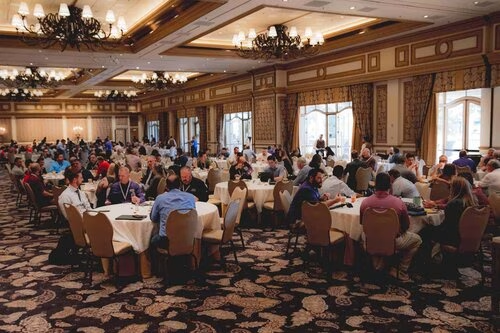
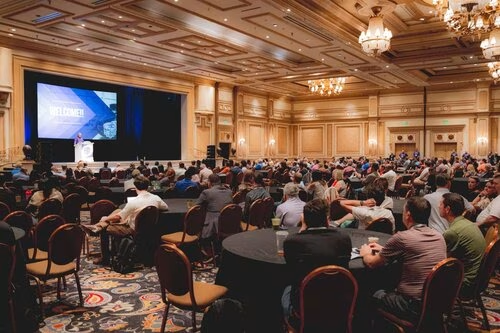
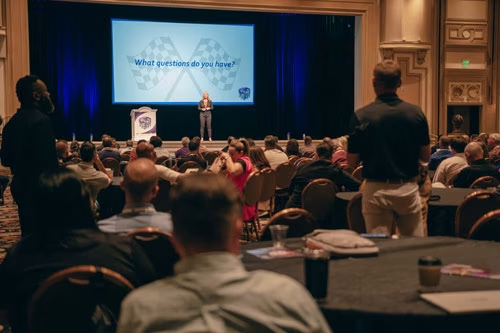
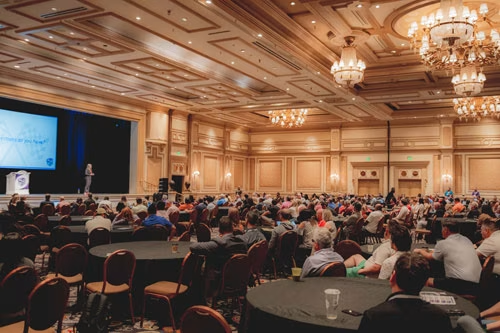
Live sessions and workshops help teams internalize concepts and compare notes with peers. Explore upcoming schedules, session details, and speaker lineups to plan your learning path. You can review the event calendar at Education and Events, preview the agenda at 2025 Event Agenda, and view presenters at 2025 Featured Speakers. If you are deciding which roles should participate, the outline at Who Should Attend BHPH United Summit may help. For ongoing skill building, see Dealer Workshops and Training and browse insights on the Blog.
Regional and Program Specific Learning
Regulatory expectations and customer profiles vary by region. Tailored education helps teams apply best practices in local markets. Explore regional or program specific pages such as BHPH Dealer Education Texas, BHPH Training Southeast, BHPH Training Mid Atlantic, and related Subprime Auto Dealer Education topics. For used car dealer teams that are adding or optimizing BHPH, the broader hub at Used Car Dealer Education offers cross functional context.
Measuring What Matters
Dashboards keep attention on the indicators that predict portfolio health. Consider a weekly leadership review covering: first payment default rate, 31 to 60 day delinquency percent, roll rate from 1 to 30 to 31 plus, extension usage and cure rate, repo rate and recovery percentage, and net charge off as a percent of average receivables. Layer in static pool analysis monthly to confirm cohort performance and identify underwriting or collections drift. Use the results to coach specific behaviors such as contact cadence, promise quality, and stips accuracy. For worksheets and templates, explore Dealer Portfolio Management Education and Dealer Collections Training.
Culture, Communication, and Customer Experience
BHPH success is not only math and policy. It is also trust and clarity. Set expectations at delivery on payment methods, due dates, service process, and how to ask for help early. Provide multiple ways to pay and simple communication channels. Celebrate on time payments and cleanly explain steps if a customer falls behind. A respectful tone, consistent scripts, and documented follow up reduce escalations and improve retention. Consider a quarterly file review focused on communication quality. Additional ideas are available in Customer Retention Training and Dealer Customer Experience Education.
Helpful Links
Buy Here Pay Here Industry Education FAQs
Explore More Topics
Continue your learning journey with related guides such as Payment Processing Training, Default Management Education, Dealer Operations Management Training, and Dealer Marketing Training Education. For broader used car dealer perspectives, visit the Blog and Dealer Industry Insights Education.
