
Training for Used Car Dealers
Strong leadership is the engine of every successful buy here pay here operation. Our buy here pay here leadership training page brings together practical strategies that help dealer principals, general managers, collections leaders, and department heads improve performance, manage risk, and drive consistent results. Learn how to align people, process, and technology across underwriting, collections, accounting, service, and sales to create a disciplined culture that improves portfolio quality and customer experience. Explore role based frameworks, measurable KPIs, and real world playbooks that translate boardroom plans into storefront execution. For a deeper look at tactical courses that complement leadership development, review resources like BHPH Operations Training, BHPH Compliance Education, and BHPH Collections Training. Whether you lead a single rooftop or a multi location enterprise, you will find methods to build accountability, coach teams, and protect profitability.
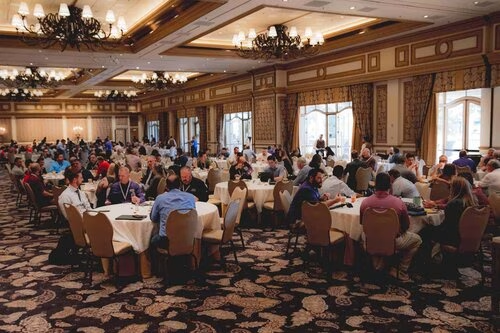
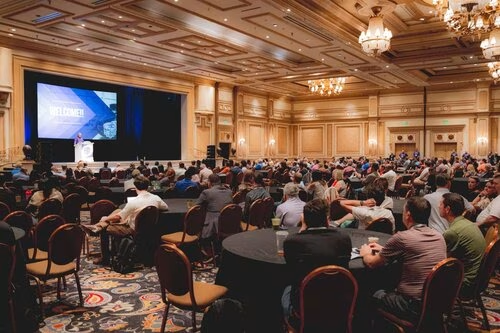
Use this page to register members of your dealership ASAP!
ONLY $299 For Each Addt'l Dealership Attendee
CAESARS ROOMS DISCOUNTED TO $189 a night
(Plus Resort Fee)
This guide focuses on leadership habits that turn strategy into daily practice, from coaching collectors to aligning inventory and pricing with risk appetite. For event based learning and peer exchange, see Education and Events, the Summit Agenda, and 2025 Featured Speakers. For ongoing insight, visit the Blog and BHPH Dealer Education.
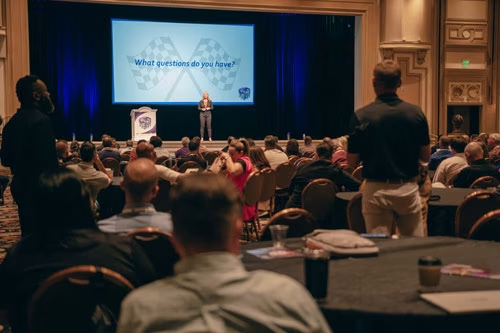
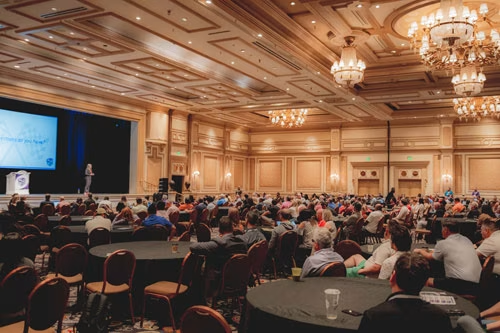
What buy here pay here leadership training covers
Buy here pay here leadership training builds the decision frameworks, coaching skills, and operational discipline necessary to grow a subprime portfolio while managing loss, compliance risk, and customer outcomes. The goal is to create a unified management system that connects strategy to the showroom, call center, and service drive. Leaders learn how underwriting guidelines, inventory mix, reconditioning standards, payment terms, and collections cadence shape portfolio performance and brand reputation. The curriculum blends data literacy with frontline coaching, enabling managers to set expectations, inspect what they expect, and respond to leading indicators before lagging results harden.
A complete leadership path spans culture development, risk governance, financial control, people management, and process standardization. It pairs classroom style learning with playbooks and scorecards that keep teams aligned. If you are building a leadership bench, explore Dealer Leadership Development Training, Dealer Operations Management Training, and Used Car Dealer Operations Training.
Key outcomes leaders can expect
- Stronger alignment between underwriting, inventory, pricing, and collections strategy
- Improved portfolio performance through disciplined KPIs and daily huddles
- Lower roll rate and fewer charge offs with proactive customer outreach and payment coaching
- Reduced compliance exposure with clear policy, training cadence, and audit readiness
- Higher staff engagement, lower turnover, and robust succession planning
Core leadership pillars for BHPH
The following pillars organize leadership development into manageable tracks you can sequence across quarters or implement in parallel. Each pillar is supported by deep dive courses such as BHPH Operations Best Practices, BHPH Risk Management Training, and BHPH Profitability Training.
1. Culture and accountability
Culture is a system of shared commitments and clear accountabilities. Leaders learn to define role expectations, implement written standards, and conduct daily huddles that keep score on controllable inputs. The outcome is a team that knows what good looks like and repeats it consistently. See related guidance in Dealer Professional Development Training.
- Daily huddles with red yellow green dashboards for each department
- Role scorecards with three to five leading indicators per position
- Coaching one on ones with structured agendas and action logs
2. Risk and underwriting alignment
Underwriting is not a standalone gate. It is integrated with inventory acquisition, recon standards, and pricing. Leaders learn to calibrate approval tiers, advance rates, and deal structure based on portfolio feedback. For deeper coverage, see BHPH Underwriting Education and BHPH Credit Policy Education.
- Tight credit box definitions with documented exceptions process
- Inventory mix and recon targets aligned to expected term and payment
- Use of income verification, residence stability, and payment method preference as risk signals
3. Portfolio and collections leadership
Collections is a customer success function with clear queues, call quality standards, and escalation thresholds. Training emphasizes proactive engagement before due dates, payment method optimization, and respectful but firm follow up. Explore BHPH Collections Best Practices, Payment Performance Education, and Portfolio Performance Training.
- Queue design, talk tracks, and disposition codes that feed KPI accuracy
- Promise to pay management with follow through metrics and coaching
- Recovery and reinstatement strategies that preserve net yield
4. Compliance and audit readiness
Leadership teams establish a compliance calendar, policy library, and internal testing cadence. This reduces risk related to credit disclosures, collections communication, privacy, and repo process. Reference BHPH Legal Compliance Education, Federal Compliance Education, and State Compliance Education.
- Written policy management with version control and staff acknowledgments
- Quarterly internal audits and remediation tracking
- Call monitoring and letter review that document fair treatment
5. Finance, accounting, and cash discipline
Leaders need a reliable view of cash, loan loss provisioning, and unit economics. Training covers reconciliation, aging, capital cost, and controls that prevent leakage. For more, see Dealer Accounting Training Education and BHPH Accounting Education.
- Unit economics model including recon, delivery cost, and contribution margin
- Allowance methodology linked to roll rate and lag curves
- Cash controls for payments, refunds, and recovery proceeds
6. Service and reconditioning leadership
Service impacts delivery readiness, warranty exposure, and customer satisfaction. Leaders learn to balance recon speed with quality and to schedule capacity for both retail and portfolio work. Explore Used Car Dealer Service Operations Training.
Metrics that matter
Leadership training translates strategy into specific KPIs with thresholds and accountable owners. Use a one page scorecard per department with trend lines and weekly comments.
- Inventory: days to front line, average recon spend, vehicle turns, aged mix
- Underwriting: approval rate by tier, average advance, exceptions ratio, first payment default
- Collections: same day contact rate, promise kept rate, roll rate 0 to 29, charge off percent
- Profitability: gross per unit, recon ROI, cost of capital, net portfolio yield
- Customer: on time payment percent, service response time, complaint resolution time
People systems that scale
Durable leadership programs include hiring scorecards, ramp plans, coaching cadence, and succession maps. Standards create consistency without stifling judgment. For multi store teams, cross train critical roles and deploy traveling trainers. Consider BHPH Staff Training Development and BHPH Multi Location Operations Training.
- Competency based interviews and realistic job previews
- Thirty sixty ninety day ramp plans by role with skill checks
- Bench charts that identify ready now and ready later candidates
Technology and data enablement
Technology should simplify work and improve decision quality. Leaders learn how to map processes before selecting tools, set data definitions, and build dashboards that match roles. See Dealer Technology Training Education and BHPH Technology Integration Education.
Market specific learning and events
Regional regulation, labor markets, and customer profiles vary. We offer state and regional education to tailor leadership practices to your market realities. Explore Subprime Dealer Education Texas, Subprime Dealer Education Florida, and Subprime Dealer Education Pennsylvania. For event programming and peer learning, review Who Should Attend BHPH United Summit, the 2025 Event Agenda, and travel support like Discounted Airfare.
Related learning paths and resources
You can also learn from real world case studies and tactical write ups on the Blog, explore team introductions on Meet Us, and review company background at About Us. For research and benchmarking, visit the Research Page Template. Compliance notices are available at Privacy Policy. For general inquiries, use Contact Us.
Leadership scenarios and playbooks
Scenario based training helps leaders apply concepts under pressure. Typical scenarios include sudden roll rate spikes, recon backlog, unexpected delinquency pattern shifts, regulatory inquiries, and capital cost increases. Each scenario comes with a playbook that defines root cause checks, cross functional meetings, and action steps with owners and deadlines. For example, a roll rate increase in the 0 to 29 bucket might trigger a cohort analysis by delivery month, payment method adoption review, and call cadence audits for days negative three to positive three relative to due date. Leaders use the same template to document findings and to debrief with teams during weekly operating reviews.
Frequently asked questions
Explore more
Continue your learning with topic tracks like BHPH Advanced Operations Training, BHPH Loss Mitigation Training, Dealer Sales Training Education, and Dealer Customer Experience Education. For session ideas, share a Topic Suggestion and view upcoming programming on 2025 Event Agenda.
