
Management Training for Used Car Dealers
Strengthen your dealership with focused buy here pay here risk management training designed for real world results. This page walks through a comprehensive approach to identifying, measuring, and controlling risk in your BHPH operation across underwriting, collections, portfolio performance, compliance, and cash flow. Whether you are launching an in house financing model or optimizing a mature portfolio, you will find actionable steps, practical tools, and standards that improve payment performance and reduce loss. Explore topics that align daily operations with sound policy, consistent decisioning, and transparent reporting. Learn how to connect credit policy to collections strategy, use analytics to forecast risk, meet regulatory expectations, and coach teams for consistency at scale. Dive into key skills for owners, GMs, underwriting leaders, and collections managers to tighten risk exposure while protecting growth and customer experience. Use the resources and internal links on this page to go deeper on the subjects that matter most to your store.
Use this page to register members of your dealership ASAP!
ONLY $299 For Each Addt'l Dealership Attendee
CAESARS ROOMS DISCOUNTED TO $189 a night
(Plus Resort Fee)
This training emphasizes a practical framework you can apply immediately. You will discover how to build a risk aware culture, standardize underwriting, elevate compliance, and manage your portfolio proactively with clear metrics and dashboards. Content connects classroom learning to in store execution, so teams align on definitions, thresholds, workflows, and review cadence. The result is more predictable cash flow, fewer surprises, faster decisions, and a better customer journey that supports long term performance.
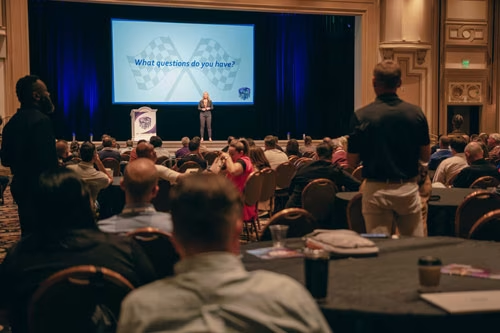
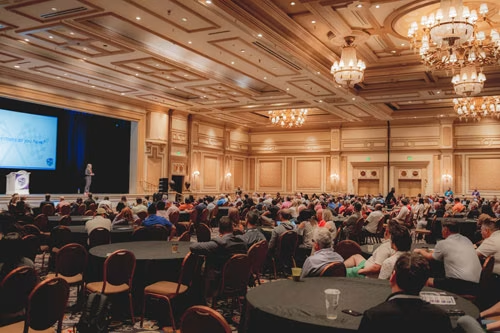
What is BHPH Risk Management
BHPH risk management is a unified system of policies, processes, and controls that manage exposure across the customer lifecycle. It starts with clear credit policy, continues through verification and underwriting, extends into payment performance management and collections, and is reinforced by reporting, audits, and leadership coaching. Effective programs are written, trained, measured, and reviewed. They integrate compliance, operations, and financial goals so your team can make fast, consistent decisions that protect capital and support growth.
Training outcomes you can expect
- Sharper underwriting with aligned credit tiers, verifications, and stip handling
- Smoother payment performance with clear due date policies and renewal paths
- Collections playbooks that move accounts early and reduce charge offs
- Portfolio analytics that forecast delinquency and loss by risk tier and term
- Compliance discipline for state and federal requirements with audit readiness
- Cash flow planning that aligns down payment, term, and structure with capital needs
- Leadership habits that coach consistency, accountability, and speed
- Technology and data use that standardize decisions and simplify oversight
Who benefits from this training
This program supports owners and operators who manage risk and return in a BHPH or LHPH model, as well as teams that influence daily decisions and outcomes. It is ideal for new operators building policy from scratch and experienced operators tightening standards for scale. If your store is preparing for growth, new locations, or capital partnerships, these tools will help you document and defend your process.
- Owners, GMs, and controllers responsible for capital and performance
- Underwriting leaders and sales managers who set structure and terms
- Collections and recovery managers improving roll rates and cure paths
- Compliance coordinators standardizing documentation and audits
Core modules in buy here pay here risk management training
1. Credit policy and underwriting consistency
Risk reduction starts with a written credit policy that defines risk tiers, structure ranges, and verification standards. You will learn how to align LTV bands, down payment minimums, income to payment ratios, and term limits to performance history. The course explains how to design scorecards that weigh stability, capacity, and character along with vehicle risk and deal structure. You will see examples of approval matrices, exception processes, and documentation checklists that your team can adopt. Tie this foundation to additional education in buy-here-pay-here-underwriting-education and broader dealer programs like dealer-underwriting-education.
2. Payment performance management and collections
A proactive collections system relies on early engagement, clear scripts, and thoughtful hardship options that protect both customer and capital. We walk through day one expectations, contact cadences, cure strategies, extensions, and deferments that follow written rules. You will connect payment performance data to staffing plans and dial strategies. Teams will learn to segment by risk and choose the right channel mix. Add depth with specialized content in buy-here-pay-here-collections-training, buy-here-pay-here-real-world-collections-training, and portfolio education at buy-here-pay-here-portfolio-management-education.
3. Compliance and audit readiness
Compliance is a core risk control. You will learn how to map key laws and regulations to your workflow, create checklists for disclosures, and maintain clean files. The program explains how to document adverse action, handle repossession notices, and manage communication rules. We will cover training cadence, testing, and record keeping for state and federal standards. Continue learning with buy-here-pay-here-compliance-education, buy-here-pay-here-federal-compliance-education, and buy-here-pay-here-state-compliance-training. For general guidance, visit dealer-compliance-best-practices and independent-dealer-compliance-education.
4. Portfolio analytics and reporting
Strong reporting connects decisions to outcomes. You will build a dashboard that tracks delinquency by risk tier and term, roll rates, static pool loss, recovery, and net charge off timing. Learn to use cohort analysis, payment to income, renewal impact, and vehicle level performance to refine structure bands and acquisition strategy. The module includes sample report layouts, review cadence, and red flag thresholds that drive action instead of passive monitoring. For advanced sessions, explore dealer-portfolio-management-education and subprime-portfolio-management-training.
5. Operations, technology, and people
Risk management is a team sport. You will see staffing models, job aids, and coaching practices that align sales, underwriting, funding, and collections. The course reviews technology selection, integration, and data hygiene that support clean decisions and easy audits. We will cover permissioning, queue logic, and scorecard calibration. To round out your operations toolkit, visit buy-here-pay-here-operations-training, dealer-operations-management-training, and dealer-technology-training-education.
KPIs to watch and how to improve them
A risk program should move numbers. After this training, your team will focus on a short list of indicators that matter most. Delinquency should be reported in industry standard buckets and segmented by tier, dealer, location, and vehicle type. Roll rate targets will drive early stage effort and staffing levels. Static pool loss and recovery will inform structure ranges and repossession strategy. Approval and exception rates will tie back to written policy and quality control. Time to first payment default and early pay liquidation will expose root cause by channel and deal structure. Each KPI gains an owner, review cadence, and an action plan template so meetings produce decisions and follow up.
Formats and how this training fits your calendar
Training is available in workshop series, onsite sessions, and conference tracks so your team learns together. To see upcoming live sessions and networking opportunities, review education-and-events, 2025-event-agenda, 2025-featured-speakers, and summit-agenda. If you are evaluating who on your team will benefit most, visit who-should-attend-bhph-united-summit. For background on our approach, explore home, about-us, and current insights on the blog. When you are ready to discuss dates or customization, use contact-us.
Sample agenda highlights
- Building a tiered credit policy with structure ranges that reflect performance history
- Designing a verification checklist that reduces fraud and speeds funding
- Building a day one to day thirty collections playbook with scripts and channel mix
- Readiness for repossession, notices, and redemption strategies with compliance guardrails
- Constructing a portfolio dashboard and review cadence that prevents surprises
- Leadership routines that anchor risk meetings, file reviews, and coaching feedback
Extend learning with related education
Many stores combine this course with focused tracks to lock in execution. Explore buy-here-pay-here-operations-education, buy-here-pay-here-profitability-training, and used-car-dealer-risk-management-education. If your team serves multiple customer segments, consider subprime-risk-management-education and subprime-collections-strategy-education. Operators scaling to new rooftops often add dealer-leadership-development-training and dealer-performance-optimization-education to reinforce culture and accountability.
Common pitfalls and how to avoid them
Inconsistent underwriting, unclear exception authority, and loose documentation produce avoidable risk. Stores also struggle when collections teams chase balances without defined cure targets or when reports list numbers without owners or actions. Another pitfall is policy drift as staffing changes or growth accelerates. This program provides guardrails that survive change: written standards, cross training plans, and dashboards that flag drift early. You will learn to confirm execution with file audits, call calibrations, and scenario coaching. The result is a system that scales, not a set of tips that erode over time.
Helpful links for deeper dives
- buy-here-pay-here-dealer-education
- buy-here-pay-here-dealer-training-program
- buy-here-pay-here-regulatory-guidance
- used-car-dealer-operations-best-practices
- dealer-risk-management-training
- buy-here-pay-here-audit-preparedness-training
- used-car-dealer-portfolio-management-education
- dealer-education-resources
- privacy-policy
- contact-us
Frequently Asked Questions
It is tailored to the BHPH model. The curriculum connects credit policy, structure, collections, portfolio analytics, and compliance into one risk system with written tools and measurable outcomes. Examples, scripts, and dashboards are specific to in house financing.
Owners, GMs, underwriting leaders, collections managers, and compliance coordinators gain the most. Cross functional attendance ensures policies and metrics are aligned across sales, funding, and collections for consistent execution.
You will receive sample credit policy templates, verification checklists, scorecard examples, collections scripts, portfolio dashboard layouts, review cadence guides, and audit readiness checklists that your team can adapt and adopt quickly.
Many stores see faster funding and better early stage payment performance within 30 to 60 days. Portfolio level improvements in delinquency and charge off trends typically follow as policy changes cycle through cohorts over several months.
Yes. The program maps core requirements into practical workflows and documentation. For more depth, see buy-here-pay-here-federal-compliance-education and buy-here-pay-here-state-compliance-education for region specific topics and policy updates.
