

Processing Training for Used Car Dealers

Improve the way your store accepts and manages payments with practical Buy Here Pay Here payment processing training. This page explains proven workflows, controls, and technologies that help in house financing dealers streamline cash, card, ACH, and mobile payments while reducing avoidable risk. You will learn how to structure compliant payment policies, enable convenient omnichannel options like auto pay and text to pay, and reconcile daily activity with accuracy across your DMS and accounting. We also cover staff scripting, late fee logic, chargeback readiness, and portfolio level reporting so you can make faster, cleaner decisions. If you are growing locations, adding new payment rails, or tightening controls, this guide connects you to deeper topics like operations, compliance, collections, and profitability. Explore related education for a complete BHPH operations toolkit in areas such as BHPH Operations Training, Compliance Education, and Collections Training.
Use this page to register members of your dealership ASAP!
ONLY $299 For Each Addt'l Dealership Attendee
CAESARS ROOMS DISCOUNTED TO $189 a night
(Plus Resort Fee)
Whether you are standardizing policy, reducing delinquencies, or modernizing customer payment options, this resource shows how to align process, people, and platforms. You will find checklists, KPI ideas, and cross functional guidance that pairs payment processing with underwriting, collections, and accounting. Continue below for step by step frameworks and practical best practices.
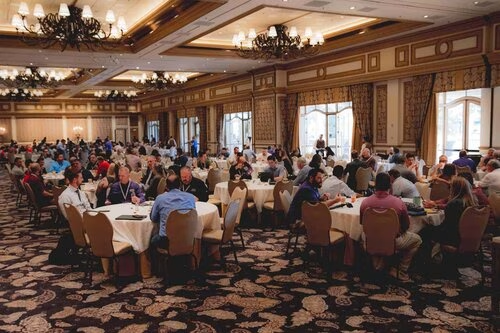
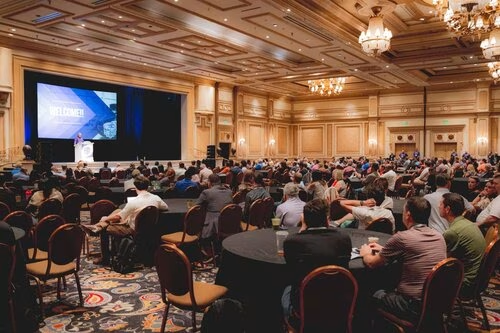
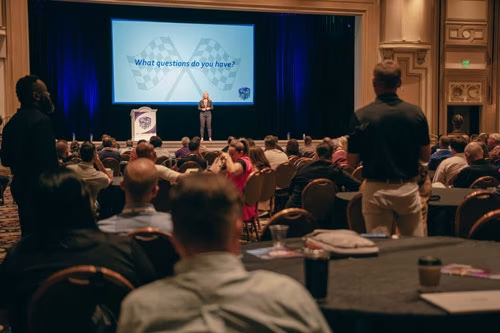
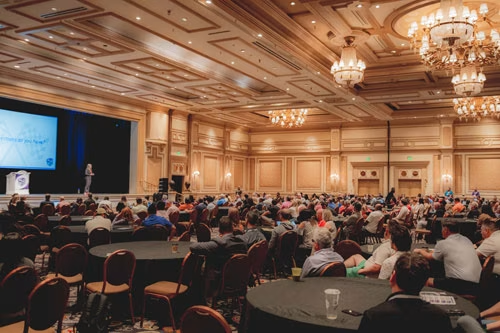
What this Buy Here Pay Here Payment Processing Training Covers
Payment processing in a Buy Here Pay Here environment is the connective tissue between sales, servicing, collections, and accounting. It touches customer experience, compliance, and profitability. This training focuses on building a standardized, auditable flow for every payment type your customers use, including cash in store, money orders, debit cards, ACH, remote pay links, text to pay, mobile wallets, kiosk payments, and set it and forget it auto pay. You will learn how to document policy, assign roles, deploy technology, and monitor results across locations, all while keeping controls lightweight for the front line.
Key Outcomes You Can Expect
- Standardized workflows that reduce errors, rework, and disputes
- More on time payments through convenient channels and clear communication
- Tighter cash controls and faster daily close with clean reconciliations
- Improved data quality for collections strategy and portfolio reporting
- Reduced compliance exposure around fee assessment and card handling
A Practical Framework for BHPH Payment Excellence
Use this five phase roadmap to build or upgrade your program. Each phase is designed to be actionable for single rooftop stores and multi location operators.
1. Assess and Baseline
- Inventory current payment channels, processors, kiosk or portal tools, and in store procedures
- Measure current adoption rates, authorization success, chargebacks, reversals, and cash over or short
- Map the end to end customer journey from payment reminder to receipt delivery
2. Design Policy and Customer Experience
Create one master policy that governs payment acceptance, fee logic, exception handling, and same day posting cutoffs. Align language with your contract and state rules, and keep scripting consistent across channels.
- Define accepted methods, grace periods, late fee triggers, and returned payment handling
- Standardize receipt formatting and cash drawer controls, including double count and safe drops
- Script payment reminders that set clear expectations without creating UDAAP risk
3. Enable Technology and Integrations
Choose processors and tools that integrate with your DMS, CRM, and accounting. Prioritize tokenized card storage, NACHA compliant ACH, recurring schedules, text to pay links, and role based permissions. Ensure audit trails and exportable logs.
- DMS integration for real time posting and simple reconciliation
- Customer portal or app for auto pay sign up, balance views, and receipts
- Secure card handling with PCI scope reduction and device management
4. Train Teams and Launch
Deliver role specific training for cashiers, collectors, managers, and accounting. Use scenario based practice: partial payments, split tenders, returned ACH, chargebacks, payment reversals, and reinstatements. Reinforce scripting and documentation standards.
5. Monitor, Audit, and Improve
- KPIs: on time rate, auto pay enrollment, authorization success, average days past due, daily close time, exceptions per 100 payments, chargeback ratio, cash over or short
- Monthly audits of drawer counts, fee assessment accuracy, and reversal approvals
- Quarterly processor statement reviews and cost per payment analysis
Compliance Considerations for Payment Processing
A strong payment program balances customer convenience with strict controls. Keep your procedures aligned with your contracts and applicable state rules. Use plain language. Make fee disclosures easy to find in store and online. Train your staff to handle payments without making promises that modify the contract terms.
- Card handling and PCI: minimize card exposure, lock down terminals, and use tokenization
- ACH rules: secure authorizations, verify account ownership, and document recurring schedules
- Fee governance: late fees, convenience fees, and returned payment fees must follow contract and state limits
- Communication practices: avoid unfair or deceptive language in reminders and receipts
For deeper coverage on laws, exams, and documentation, visit BHPH Compliance Education, Federal Compliance Training, and Regulatory Guidance.
Designing Customer Friendly Payment Journeys
Your best collections strategy is prevention. Clear reminders, frictionless payment options, and predictable receipts keep customers current and reduce inbound call volume. Offer multiple paths to pay and make self service the default. Keep your scripts empathetic and consistent across channels.
- Set up auto pay at delivery with simple opt in and transparent cancellation steps
- Send reminders by text and email with one click pay links and clear due dates
- Provide receipts instantly with remaining balance and next due date
Strengthen your end to end approach with Customer Retention Training, Payment Performance Education, and Collections Best Practices.
Daily Reconciliation and Controls
Fast, accurate close builds trust between the front line and back office. It also protects cash and reduces audit findings. Standardize daily packets and automate matching wherever possible.
- Cash drawer setup, open and close counts, safe drops, and supervisor sign off
- Batch settlement logs from card and ACH processors mapped to DMS payment batches
- Exception queue for reversals, returned ACH, and chargebacks with approvals and notes
To connect the dots with accounting and reporting, explore BHPH Accounting Education and Dealer Performance Optimization Education.
Technology Selection Tips
Aim for a stack that reduces duplicate entry and surfaces real time data to managers. Evaluate processors and tools with a scorecard across cost, uptime, integration depth, and security. Pilot new features in one store before rollout.
- Must have: tokenized vault, recurring billing engine, two factor admin access, and full audit logs
- Nice to have: multilingual portals, kiosk support, EMV and contactless, and real time SMS pay links
For guided selection, see Technology Integration Education and Dealer Technology Training Education.
Roles, Responsibilities, and Training Cadence
Clear ownership reduces gray areas. Define who sets policy, who approves exceptions, and who conducts audits. Refresh training at hire, at 30 days, then quarterly. Track competency with short scenario based quizzes and side by side observations.
- Front desk or cashier: intake, ID verification when required, receipt accuracy, and drawer integrity
- Collectors: reminder cadence, hardship options within policy, and escalations
- Managers: exception approvals, fee governance, daily close approvals, and coaching
- Accounting: bank recs, processor settlements, adjustments, and audit sampling
Common Pitfalls to Avoid
- Unwritten exceptions that become precedent and create fairness concerns
- No owner for reconciliation exceptions, leaving unresolved items month to month
- Inconsistent fee disclosure between portal, receipts, and in store signs
How Payment Processing Connects to the Rest of Your Store
Payment processing does not live in a vacuum. It influences underwriting criteria, default management playbooks, and even inventory decisions. High auto pay enrollment and seamless remote payments may allow tighter work schedules and fewer in person lines. Better payment data helps collections deploy the right contact at the right time, and it gives leadership a clearer picture of portfolio health.
Build a cohesive program using related education like Underwriting Education, Default Management Education, Portfolio Performance Training, and Profitability Training. For broader dealer development, explore Dealer Operations Management Training, Dealer Leadership Development Training, and our latest insights on the Blog.
Helpful Internal Resources
Frequently Asked Questions
Related Education and Events
Stay current with evolving best practices by engaging in peer learning and events. Review the Education and Events calendar, meet instructors on Meet Us, and learn about Summit Sponsors. For agenda previews, see the 2025 Event Agenda and 2025 Featured Speakers. For policy details, visit the Privacy Policy.
