

Federal Compliance Training For Dealers

Stay audit ready and protect your dealership with buy here pay here federal compliance training built for real store operations. This page explains the core federal rules that impact BHPH retailers and finance operations, including FTC Safeguards, FCRA, ECOA, TILA, Red Flags, OFAC screening, TCPA, UDAAP, and IRS Form 8300 reporting. You will find practical checklists, role based guidance, and policy essentials you can apply in sales, underwriting, collections, and data security. Use this resource alongside related pages like buy-here-pay-here-federal-compliance-education, dealer-compliance-best-practices, and blog for deeper dives and updates. Whether you operate one lot or multiple rooftops, a consistent compliance program reduces risk, improves customer trust, and supports profitability. Explore the sections below to align your team, documents, technology, and vendors with federal expectations.
Use this page to register members of your dealership ASAP!
ONLY $299 For Each Addt'l Dealership Attendee
CAESARS ROOMS DISCOUNTED TO $189 a night
(Plus Resort Fee)
BHPH compliance is more than a binder on a shelf. It is daily behaviors, documented controls, tested systems, and trained people. The guidance below maps each federal requirement to practical steps your store can take now, with links to extended learning like buy-here-pay-here-compliance-education, used-car-dealer-regulatory-compliance-training, and buy-here-pay-here-state-compliance-training.
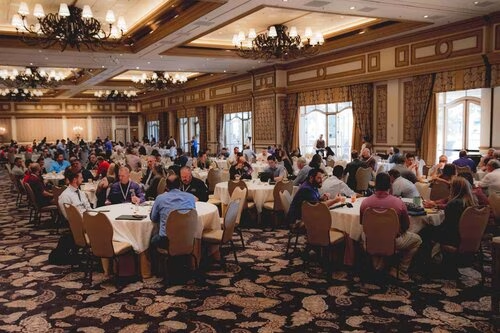
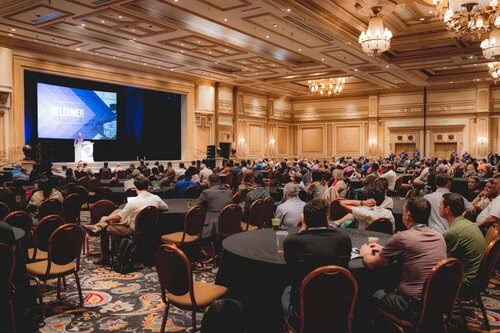
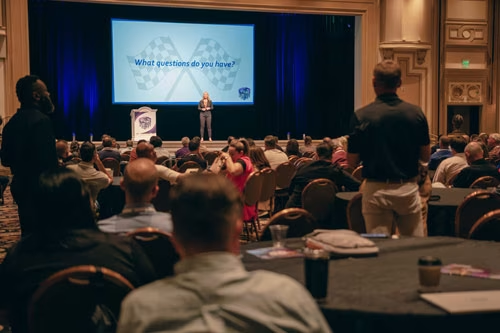
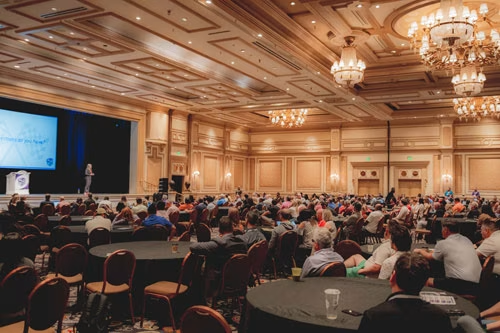
What Buy Here Pay Here Federal Compliance Training Covers
Buy here pay here operations combine retail sales and in house financing, which places your store in the scope of multiple federal consumer protection and data security laws. Effective training focuses on how each rule shows up during marketing, deal structuring, underwriting, delivery, payment handling, servicing, repossession, and data management. High value topics include FTC Safeguards Rule and GLBA Privacy, FCRA and adverse action, ECOA and fair lending, TILA and advertising, Red Flags identity theft program, OFAC screening, TCPA compliant communications, UDAAP risk controls, e signature and E Sign consent, Form 8300 cash reporting, and Servicemembers Civil Relief Act checks before enforcement activity. The following guide translates each regulation into store level tasks, evidence, and metrics you can track.
Core Federal Rules Every BHPH Store Should Operationalize
- FTC Safeguards Rule and GLBA Privacy. Conduct a written risk assessment, appoint a qualified individual, implement multi factor authentication, encrypt sensitive data, train staff, monitor vendors, test controls, and document an incident response plan. Provide required privacy notices and limit data sharing.
- FCRA and Adverse Action. When using consumer reports or credit scores, provide disclosures. If credit is denied or terms are materially less favorable, issue an adverse action notice under ECOA Regulation B and, where applicable, FCRA risk based pricing or credit score exception notices. Retain decision documentation.
- ECOA Fair Lending. Maintain consistent underwriting criteria and pricing. Prohibit discrimination based on protected classes. Monitor exceptions, overrides, deal structure differences, and collection outcomes for disparities. Train staff on fair treatment in sales and servicing.
- TILA and Advertising. Accurately disclose APR and finance charges in retail installment contracts. In ads, if you mention specific credit terms, include all triggered disclosures clearly and conspicuously. Align deal jacket figures with DMS and ledger entries.
- Red Flags Identity Theft Program. Maintain a written program that identifies relevant red flags, detection methods, response steps, oversight, and periodic updates. Train employees to verify identity, spot synthetic ID patterns, and respond to alerts from CRAs and vendors.
- OFAC Screening. Screen all buyers, co buyers, payers, and related businesses against the SDN list at application and before funding. Re screen on material changes. Retain match results and resolution notes. Stop and escalate any potential hit.
- TCPA and Consumer Communications. Obtain proper consent before using autodial or prerecorded messages. Maintain opt out processes for texts, calls, and emails. Log consent capture, revocations, and contact attempts to avoid harassment risk.
- UDAAP Risk. Ensure all policies and scripts avoid unfair, deceptive, or abusive acts or practices. Audit marketing claims, fee disclosures, add ons, payment posting, late fee assessment, and repo practices for clarity and fairness.
- Form 8300 Cash Reporting. File Form 8300 within 15 days when receiving over 10,000 in cash in one or related transactions. Aggregate related payments within 12 months. Provide written statements to customers by January 31. Securely retain proof of filing and acknowledgement.
- ESIGN Compliance. Before using electronic signatures, obtain affirmative consent, disclose hardware and software requirements, and provide records in a printable, retainable format. Maintain tamper evident audit trails.
- SCRA Checks. Before repossession or legal action, verify active duty status through DMDC. Follow interest rate relief and protections where applicable, and document your check results in the file.
Building A Practical Compliance Management System
A compliance management system translates laws into daily routines, supporting evidence, and oversight. For BHPH stores, keep it lean, visible, and measured. Assign ownership for each regulation, set review cadences, and integrate controls into your DMS and payment systems. The elements below align with regulatory expectations and are scalable to single or multi lot operations.
- Governance and accountability: designate compliance leads, brief ownership monthly, and document decisions and exceptions.
- Policies and procedures: keep concise, role based procedures tied to deal steps and system screens so staff can follow them in real time.
- Training and testing: provide onboarding and annual refreshers with short quizzes, scenario practice, and sign offs by role.
- Monitoring and quality control: review a sample of deals weekly for disclosures, signatures, notices, and calculation accuracy. Log findings and fixes.
- Complaint response: track issues by category, root cause, and resolution time. Use trends to improve scripts and forms.
- Vendor oversight: risk rank vendors, collect SOC reports where available, and document safeguards, breach notification terms, and data minimization.
- Internal audit: conduct periodic end to end reviews across marketing, sales, underwriting, funding, servicing, and repossession.
Operational Playbooks By Department
Department specific playbooks bring compliance to life. Tailor the following to your workflows and systems. Keep each checklist to one or two pages per role.
- Marketing and sales: verify ad claims, include required credit disclosures when triggering terms are present, and provide clear price and fee information. Capture consent for texts and calls during lead entry.
- Underwriting: use a checklist for ID verification, OFAC screen, credit report permissible purpose, income and residence verification, and consistent application of scorecards or criteria. Document reasons for overrides.
- Funding and delivery: ensure TILA disclosures match the retail installment contract, present privacy notices, and provide copies. Securely store signed documents and digital audit trails.
- Servicing and collections: apply payments the same day, disclose fees clearly, respect communication time windows and preferences, and document hardship arrangements consistently. Train on UDAAP risk in scripts.
- Repossession and recovery: verify SCRA status, confirm notices align with state law while avoiding unfair practices, and secure data on devices in recovered vehicles. Retain full repo and sale documentation.
- IT and data security: enforce MFA, patch systems, restrict access by role, encrypt backups, test incident response, and run phishing simulations. Maintain the Safeguards work plan and board reports.
Evidence For Audits And Exams
Auditors and regulators ask for proof, not just policies. Keep your evidence organized and easy to retrieve. Store it in secure folders by topic or use your DMS and ticketing systems to auto capture it. The list below outlines common items to retain.
- Screenshots and logs of OFAC checks with timestamps and user IDs.
- Adverse action notices, reasons codes, and timing proof.
- Red Flags program, training records, incident logs, and update history.
- Safeguards Rule risk assessments, vendor reviews, MFA policies, encryption settings, and board reports by the qualified individual.
- Form 8300 filings, acknowledgements, and customer statements.
- TILA calculations, APR validation, and contract version control.
Key Metrics That Signal Compliance Health
Use a concise dashboard to keep leadership informed and to trigger corrective action. Good programs track both compliance process metrics and outcome metrics.
- Percent of deals with complete disclosures and signed notices.
- Adverse action timeliness and reasons code distribution.
- Red Flags alerts per 100 applications and resolution time.
- Safeguards control coverage: MFA adoption, encryption status, and vendor review completion.
- Complaint rate per 100 accounts and average resolution time.
Common Pitfalls And How To Avoid Them
Dealers often have written policies but lack operational proof. Others rely on vendor assurances without documenting oversight. Some miss Red Flags updates after adding new channels like online apps, or they quote credit terms in marketing without full TILA disclosures. Avoid these issues by assigning owners for each control, mapping evidence to a shared folder, embedding guardrails in your DMS, and scheduling quarterly mini audits. Cross train staff so departures do not stall critical tasks like Form 8300 filings or OFAC checks.
Deepen Your Program With Related Education
Expand your knowledge through focused resources on operations, collections, and data security. Explore buy-here-pay-here-operations-training, buy-here-pay-here-compliance-best-practices, dealer-compliance-best-practices, and education-and-events for ongoing updates. For a broader regulatory foundation, see federal-compliance-training-for-dealers and subprime-compliance-training. If your footprint spans multiple states, coordinate federal training with buy-here-pay-here-state-compliance-education.
Helpful Internal Links
FAQ: Buy Here Pay Here Federal Compliance Training
Disclaimers And Scope
This material is educational and does not constitute legal advice. Federal rules interact with state law on disclosures, titling, advertising, repossession, and fees. Coordinate this training with your counsel and align your procedures across jurisdictions using resources like buy-here-pay-here-state-compliance-education. For broader dealer topics, you can also review dealer-education-resources and dealer-operations-management-training.
