

and Buy Here Pay Here Dealers

Maximize margin, cash flow, and long term portfolio health with dealer profitability training purpose built for independent used car and buy here pay here operations. This page outlines a practical framework that improves front end gross, optimizes inventory turn, reduces reconditioning surprises, elevates underwriting and collections performance, and strengthens compliance and risk controls. Whether you operate retail only, BHPH, LHPH, or a hybrid model, you will find clear guidance on the profit levers that matter most. Explore key metrics, step by step training modules, and proven processes used by top performing stores. You will also find links to deep dive resources, regional education, and real world best practices drawn from active operators and subject matter experts. Use this page to benchmark your current approach, build a targeted plan for your team, and align leadership, sales, underwriting, collections, and accounting around one profitability playbook.
Use this page to register members of your dealership ASAP!
ONLY $299 For Each Addt'l Dealership Attendee
CAESARS ROOMS DISCOUNTED TO $189 a night
(Plus Resort Fee)
This dealer profitability training content emphasizes measurable outcomes and simple execution. It breaks down complex topics like pricing strategy, risk based deal structure, payment performance, portfolio analytics, and technology integration into steps your team can apply immediately. Reference the linked education pages and event resources to extend learning across roles and locations.
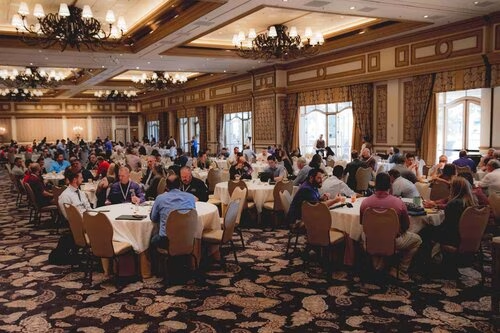
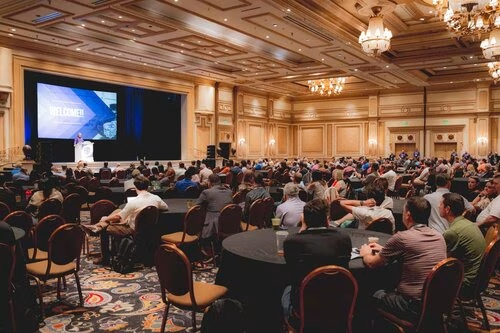
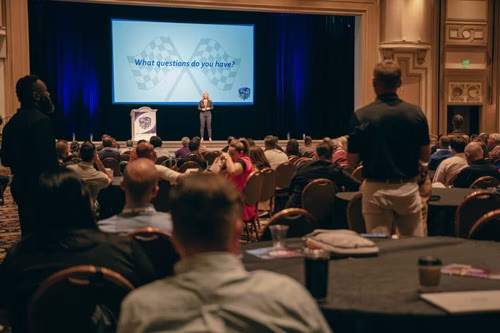
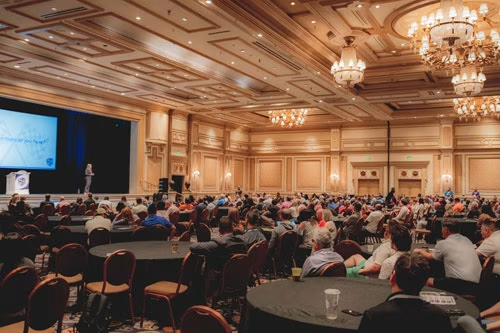
What Dealer Profitability Training Covers and Why It Works
Dealer profitability training aligns every department around a unified operating model that protects cash, accelerates turn, and compounds portfolio yield. The focus is not theory. It is repeatable, inspected processes that tighten execution daily. The approach blends used car retail fundamentals with BHPH and subprime finance disciplines so your store captures more gross today while improving portfolio performance over the life of the contract.
Core Profit Levers for Used Car and BHPH Stores
Profitability is the outcome of consistent control over a handful of inputs. Training concentrates effort on the levers below and shows exactly how to measure and manage them in your DMS and supporting tools.
- Inventory sourcing and turn: buy right, reduce days in recon, hit target price bands, and turn stock faster without compressing gross.
- Pricing strategy: dynamic retail pricing tied to demand, cost to market, and vehicle desirability index to protect front end margin.
- Underwriting and deal structure: risk adjusted advances, down payment optimization, term discipline, and payment to income alignment.
- Collections process: early stage engagement, right party contact, promise to pay integrity, and consistent escalation that prevents charge off.
- Reconditioning and service: spend control, safety first, retail ready standards, and warranty reserve discipline to cut surprises post sale.
- Compliance and audit readiness: documentation, disclosures, adverse action, and payment handling that eliminate regulatory risk.
Metrics That Matter
Training equips leaders with a concise scorecard. The point is to inspect what drives cash and portfolio returns, not drown in reports. Targets vary by market and model, but the measures are consistent.
- Front end: average front end gross, recon per retail unit, packs, and inventory turn in days on lot and days to line.
- Credit and structure: average down payment, advance to ACV, payment to income, weighted average term, and yield on paper.
- Collections: delinquency buckets, roll rates, same store payment rate, recovery rate, and charge off severity to liquidation value.
- Capital and cost: cost of funds, leverage, and cash conversion cycle from acquisition to first payment and to full payoff.
Training Modules and Practical Outcomes
Each module includes field ready checklists, talk tracks, and inspection routines. Leaders learn how to coach and hold teams accountable. Teams learn how to execute the details that move KPIs quickly and sustainably.
- Sourcing and Valuation: lane strategy, CR validation, OBD and frame checks, and forecasting recon to stay inside cost bands. See used car inventory education at used-car-dealer-inventory-management-training.
- Reconditioning Control: RO triage, reconditioning SLA, vendor scorecards, and parts strategy to cut days to line. Explore used-car-dealer-service-operations-training.
- Pricing and Merchandising: market based pricing, photo standards, feature highlights, and VDP optimization. Review used-car-dealer-pricing-strategy-education.
- Sales and Delivery: needs assessment, compliance ready menu, and speed to contract with clean stips. More in used-car-dealer-sales-process-training.
- Underwriting and Structure: risk tiers, ability to pay, collateral fit, and protective add ons aligned to policy. Deep dive at buy-here-pay-here-underwriting-education.
- Collections Excellence: payment habits, early intervention cadences, promise management, and skip tools. See buy-here-pay-here-collections-training.
- Portfolio Analytics: static pool analysis, cohort returns, loss to liquidation, and renewal strategy. Visit dealer-portfolio-management-education.
- Compliance and Audit Readiness: deal jacket completeness, adverse action workflow, and payment handling. Start with dealer-compliance-best-practices.
Implementation Roadmap
Profitable dealers implement in sprints. Each sprint sets one target metric, one new standard, and a short inspection routine. That clarity accelerates adoption without overwhelming the team.
- Sprint 1: reduce recon days to line by three days using a single point check in and daily RO stand up.
- Sprint 2: lift average down payment by two points through improved needs assessment and structure presentation.
- Sprint 3: cut 31 to 60 day delinquency by creating an early stage contact ladder and promise integrity audit.
Leaders close each sprint with a brief retrospective, update process docs, and set the next target. Over a quarter, these compounding wins materially improve cash conversion and portfolio health.
Common Profitability Pitfalls and How Training Prevents Them
Most margin erosion is self inflicted. Training hardens the system so that a busy day or new hire does not break the profit model.
- Recon sprawl: stop add on repairs that do not move retail value by enforcing must have safety standards and an RO cap.
- Payment misfit: avoid terms that look good on paper but break household budgets by aligning payment to income and commute reality.
- Collections drift: kill silent queues with dashboards, aging reviews, and a daily promise board audit.
- Inventory slow turn: cut vanity units and refresh merchandising at day 21, day 35, and day 45 with actionable price or exit decisions.
Technology Integration That Protects Margin
Tools do not create process, but the right stack makes great process easy. Training includes light integrations that shorten cycle times and improve data integrity.
- DMS and CRM alignment for lead to delivery to payment tracking and single source of truth reporting.
- Payment technology with automated reminders, omni channel capture, and policy based fee handling. See buy-here-pay-here-payment-processing-training.
- Valuation and pricing tools that tie cost to market and days in stock to target price updates.
Scaling to Multiple Locations
Multi store growth amplifies both strengths and weaknesses. Training codifies standards so you scale what works and catch drift early. Use a central playbook, shared KPIs, and a cadence of peer reviews that compare like for like stores. Managers receive coaching checklists, while regional leaders learn how to run scorecard calls that surface wins, remove roadblocks, and spread best practices quickly.
For more structure on multi location execution, review buy-here-pay-here-multi-location-operations-training and leadership resources in dealer-leadership-development-training.
Compliance and Risk are Profit Tools
Tight compliance lowers cost of capital, reduces refund and penalty risk, and speeds audit cycles. Training folds in federal and state guidance with practical checklists for document retention, disclosures, adverse action, payment posting, repossession, reinstatement, and redemption. Reference used-car-dealer-regulatory-compliance-training, buy-here-pay-here-legal-compliance-education, and buy-here-pay-here-repo-process-education.
Role Based Learning Paths
Different roles move different profit levers. Training is sequenced so each role masters the few habits that matter most, then expands skills over time.
- Sales: appointment set to show to sold, discovery, structure presentation, stips quality, and delivery checklist. See dealer-sales-training-education.
- Underwriting: risk policy, verification speed, and decision documentation. Explore dealer-underwriting-education.
- Collections: early stage cadence, promise integrity, hardship toolkit, and skip escalation. Review buy-here-pay-here-real-world-collections-training.
- Service: recon SLA, parts control, QC sign off, and warranty reserve limits. Visit dealer-service-department-training.
- Accounting: deal funding checklist, cash posting accuracy, and month end close cadence. See dealer-accounting-training-education.
Regional and Event Based Learning
Peer learning accelerates adoption. Many dealers deepen skills through regional education and summit programming that spotlights current market conditions and winning operator playbooks. Browse education-and-events, see highlights in 2025-featured-speakers, and explore sessions in 2025-event-agenda. Ongoing insights are available on the blog.
Related Profitability Education
For models adjacent to your operation, consider specialized paths that build complementary skills and broaden your team perspective.
- BHPH focus: buy-here-pay-here-profitability-training, buy-here-pay-here-operations-training, and buy-here-pay-here-portfolio-performance-training.
- LHPH and leasing: lease-here-pay-here-profitability-training and lease-here-pay-here-operations-best-practices.
- Used car retail: used-car-dealer-profitability-training and used-car-dealer-operations-best-practices.
