

for Used Car Dealers

Stronger service operations can transform subprime performance. This page explains how a disciplined, data driven service department protects gross, accelerates recon, reduces charge offs, and boosts lifetime value for subprime and buy here pay here customers. From technician productivity to warranty process, from parts control to customer communication, you will find practical guidance you can apply in your shop and your reconditioning flow. Explore workflows that shorten time to line, improve first time fix rate, and align service policies with underwriting, collections, and compliance. See how modern tools, transparent menus, and a clear measurement cadence raise payment performance and customer satisfaction without adding overhead. For deeper learning, you can review related resources like buy here pay here service education and dealer service department training located throughout the site. Use this page as a blueprint to standardize your service playbook, train your team, and connect service results to portfolio health.
Use this page to register members of your dealership ASAP!
ONLY $299 For Each Addt'l Dealership Attendee
CAESARS ROOMS DISCOUNTED TO $189 a night
(Plus Resort Fee)
This resource is built for independent dealers, buy here pay here operators, and portfolio managers who want repeatable results in the service lane and recon shop. It connects service KPIs to real profitability drivers across sales, collections, and capital. For additional operator focused topics, visit buy here pay here operations, subprime operations best practices, and the blog.

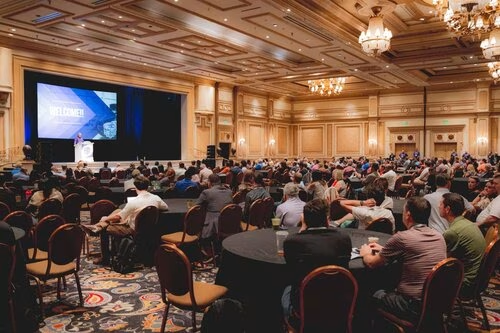


What is Subprime Service Operations Training
Subprime service operations training is a structured approach that equips used car and buy here pay here teams to manage reconditioning, warranty, customer pay, and retention services with a clear process, defined metrics, and compliant documentation. The mission is simple. Deliver reliable vehicles quickly, keep them on the road affordably, and communicate with clarity so customers stay current and satisfied. The outcome is lower losses, better collections, and higher repeat sales.
Why Service Operations Matter to Subprime Profitability
In subprime, the service lane is not just a cost center. It is a payment performance engine. Faster recon reduces floorplan interest and days to first payment. Accurate inspections lower comeback rates and limit warranty exposure. Consistent communication keeps customers driving, which supports on time payments and renewals. When service integrates with underwriting, collections, and compliance, the portfolio benefits across the board.
- Shorter time to line improves inventory turn and gross per unit
- Clear warranty rules reduce disputes and charge offs
- Transparent pricing builds trust and repeat business
- Proactive maintenance reminders support payment performance
Core Pillars: People, Process, Technology, Metrics
High performing service departments share four traits. They hire to role competencies, not just technical skill. They follow a standard operating procedure from write up to delivery. They enable teams with simple, integrated tools. They review a focused dashboard weekly and coach to targets.
- People: defined roles for advisor, dispatcher, foreman, parts, and warranty admin
- Process: consistent inspections, approvals, menus, QC, and documentation
- Technology: DMS and service write up tools that capture pics, video, and e signatures
- Metrics: a weekly scorecard that drives accountability and improvement
Service Intake and Communication That Fit Subprime Customers
Start with empathy and clarity. Train advisors to greet, verify contact preferences, confirm payment status when appropriate, and explain warranty coverage in plain language. Use digital inspections with photos and short videos. Present maintenance and repair options with a simple menu that separates must fix items from nice to have work. Secure approvals by text or email with clear labor and parts line items.
- Verify vehicle, mileage, and coverage before diagnosis to avoid surprise charges
- Provide good, better, best options when safe and appropriate
- Send status updates at promised times to prevent inbound call spikes
For deeper process templates and talk tracks, see buy here pay here service operations training and dealer service department training found at buy-here-pay-here-service-operations-training and dealer-service-department-training.
Technician Productivity and Dispatching
Technician productivity depends on a steady flow of well documented work, right parts at the right time, and realistic labor times. Use skill based dispatching that assigns jobs to the fastest qualified tech. Track effective labor rate and billed hours per repair order. Eliminate wait time with a parts staging area and pre pulled recon kits for top failure items on your core makes. Consider flat rate for specific recon tasks where quality can be measured and verified, and hourly with incentives for diagnostic efficiency or zero comeback streaks.
- Target 85 percent or better technician productivity with balanced workload
- Track comebacks within 30 days by tech and by repair category
- Use a visual dispatch board that shows promise times and parts readiness
Reconditioning Playbook That Protects Gross
Your recon process sets the tone for the entire portfolio. Standardize inspection points, max recon budgets by price band, and required items for safety and reliability. Establish a time to line target and remove bottlenecks with parallel steps where possible. Document all recon on the repair order and store photos in the DMS so sales and collections can reference work completed. Provide a 10 day post sale shakedown window for minor adjustments to avoid customer frustration and negative online reviews.
- Time to line target: 3 to 5 days depending on parts availability and shop capacity
- Budget guardrails by price band to avoid over recon
- Mandatory QC road test and second tech signoff
For a broader operations framework that connects recon to sales and pricing, visit used car dealer operations training and used car dealer pricing strategy education located at used-car-dealer-operations-training and used-car-dealer-pricing-strategy-education.
Warranty, Service Contracts, and Policy
Subprime success requires crystal clear warranty rules. Publish coverage, term, deductible, and what is excluded. Require authorization before outside repairs. Store signed disclosures with every deal jacket. Consider a simple maintenance package or discounted oil change book that brings customers back on schedule. When a vehicle is down, coordinate service updates with collections so payment arrangements reflect downtime fairly and remain compliant.
- Warranty claim cycle time target under 5 business days
- Track warranty cost per car sold by model and mileage band
- Provide a loaner or rental policy with documented limits
For compliance guardrails that reduce risk during warranty and collections conversations, review buy here pay here compliance education and buy here pay here legal compliance education at buy-here-pay-here-compliance-education and buy-here-pay-here-legal-compliance-education.
Parts Control and Vendor Strategy
Margin protection starts in the parts room. Segment fast movers and maintain min max levels. Negotiate core returns and delivery windows with suppliers. Track parts gross by brand and job type. Implement a no ticket, no part policy using barcodes to tie issues to a repair order. For recon, pre build kits for tires, brakes, fluids, filters, and common wear items across your target inventory mix.
- Weekly cycle counts for top 20 fast movers by cost and use frequency
- Two vendor quotes on high ticket parts when time allows
Technology and Integration
Use a DMS or service platform that supports photo and video inspections, text approvals, and automated status updates. Integrate vehicle history and warranty lookups. Connect service notes to customer records so advisors, sales, and collectors see the full story. If you use telematics, ensure disclosures and data use comply with state rules and your privacy policy.
For technology focused learning paths, explore buy here pay here technology integration education and used car dealer technology integration training at buy-here-pay-here-technology-integration-education and used-car-dealer-technology-integration-training. You can also view privacy-policy to align your data practices.
Dashboards and Weekly Review Cadence
Keep the score visible. Meet weekly to review recon aging, warranty cost per car sold, technician productivity, effective labor rate, customer pay gross, and comebacks. Highlight wins, remove obstacles, and assign a single owner to each action item. Share a one page summary with leadership, sales, and collections so everyone sees the same truth.
- Recon aging buckets: 0 to 2, 3 to 5, 6 plus days with clear next steps
- Technician scorecards with billed hours and comebacks
- Link service KPIs to portfolio roll rates for a full performance view
30 60 90 Day Implementation Plan
A practical rollout avoids disruption and builds momentum. In 30 days, define your inspection, write up, and approval workflows. Choose a digital inspection tool and create pricing menus for your top 20 jobs. In 60 days, launch skill based dispatch, parts staging, and a recon board that shows step, owner, and date stamp. In 90 days, implement the weekly dashboard, warranty analytics, and customer follow up cadence with reminders for maintenance intervals and satisfaction calls.
- Day 1 to 30: SOPs, menus, and digital inspections live for all ROs
- Day 31 to 60: dispatch, staging, and recon board with time to line target
- Day 61 to 90: dashboard, warranty cost tracking, and communication templates
Common Pitfalls and How to Avoid Them
The most frequent issues include inconsistent inspections, undocumented approvals, unclear warranty coverage, and parts delays. Solve these with a single source of truth in your DMS, photo and signature capture at every step, published coverage summaries, and vendor scorecards. Another pitfall is viewing service as separate from collections. When a customer cannot drive, payment risk climbs. Coordinate short term arrangements and prioritize repairs that return the vehicle to service quickly and safely.
- Create a one page warranty quick guide for advisors and customers
- Require photos for every recommended repair and every completed job
- Score vendors on price, fill rate, and delivery speed each month
Related Learning Paths and Resources
If you want to expand beyond the service lane into end to end dealer performance, explore these areas across the site. They connect directly to the skills and KPIs discussed here and provide additional templates, checklists, and operator insights.
